SOLDES
Jusqu'à -70% sur une sélection d'articles*

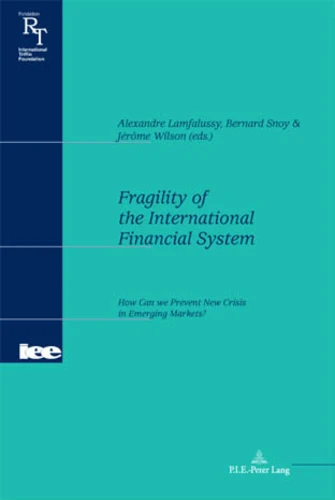
Fragility of the International Financial System. How Can we Prevent New Crises in Emerging Markets?
Par : , ,Formats :
- Paiement en ligne :
- Livraison à domicile ou en point Mondial Relay estimée à partir du 12 novembreCet article sera commandé chez un fournisseur et vous sera envoyé 127 jours après la date de votre commande.
- Retrait Click and Collect en magasin gratuit
- Livraison à domicile ou en point Mondial Relay estimée à partir du 12 novembre
- Réservation en ligne avec paiement en magasin :
- Indisponible pour réserver et payer en magasin
- Nombre de pages235
- PrésentationBroché
- Dimensions22,0 cm × 15,0 cm × 0,0 cm
- ISBN90-5201-966-5
- EAN9789052019666
- Date de parution21/01/2002
- CollectionPLG.SOC.SCIENCE
- ÉditeurPeter Lang AG
Résumé
This book contains proceedings of the International Conference organized by the International Triffin Foundation in September 2000. As a result of a two-day session of intense discussion among experts, this book presents a study programme, a proposal for action, to manage and to regulate international financial relations. The future of the EMU raises numerous questions. The tripolar regime – euro, dollar, yen – which is now emerging, foreshadows a period of cyclical instability.
Such an evolution represents a major change in the international monetary system. A glance at the past indicates that such movements cause doubt and disturbances. Prevention of forthcoming crises seems then to be essential. But if this raises a serious challenge, it does not mean that we are faced with a brand new problem. Several visionary economists have underlined dangers and opportunities inherent within a shift in any monetary regime.
Robert Triffin is one of the leading economists on questions concerning the monetary and financial systems. His work, because it does not purport to provide definitive answers, deserves to be re-examined on current uncertainties. The merit of the present work consists in attempting to draw on Triffin's intellectual legacy to deal with current and future problems.
Such an evolution represents a major change in the international monetary system. A glance at the past indicates that such movements cause doubt and disturbances. Prevention of forthcoming crises seems then to be essential. But if this raises a serious challenge, it does not mean that we are faced with a brand new problem. Several visionary economists have underlined dangers and opportunities inherent within a shift in any monetary regime.
Robert Triffin is one of the leading economists on questions concerning the monetary and financial systems. His work, because it does not purport to provide definitive answers, deserves to be re-examined on current uncertainties. The merit of the present work consists in attempting to draw on Triffin's intellectual legacy to deal with current and future problems.