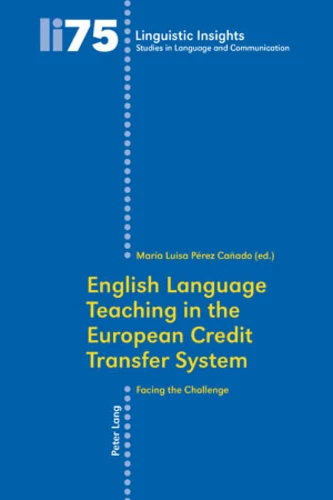
This book seeks to bridge the gap between theory and practice by identifying the main challenges which the implementation of the ECTS (European Credit Transfer System) is posing in language teaching. It reports on the outcomes yielded by prominent European research projects and thematic networks and presents the insights of a prestigious set of scholars, practitioners, and policy-makers from different parts of Europe.
The book is divided into four main parts. The first section examines the coordination of language studies in the European Higher Education Area, from general language policy development, to the practicalities of coordinating whole degrees or drawing up ECTS study guides. The second part analyses the concept of competencies within the Bologna process. Methodological aspects are broached in the third thematic block by sharing practical accounts and experiences across Europe.
The final part seeks to clarify the most important aspects with regard to evaluating language learning in the new credit system, and examines learning outcomes, student work hours, or ECTS credits.
This book seeks to bridge the gap between theory and practice by identifying the main challenges which the implementation of the ECTS (European Credit Transfer System) is posing in language teaching. It reports on the outcomes yielded by prominent European research projects and thematic networks and presents the insights of a prestigious set of scholars, practitioners, and policy-makers from different parts of Europe.
The book is divided into four main parts. The first section examines the coordination of language studies in the European Higher Education Area, from general language policy development, to the practicalities of coordinating whole degrees or drawing up ECTS study guides. The second part analyses the concept of competencies within the Bologna process. Methodological aspects are broached in the third thematic block by sharing practical accounts and experiences across Europe.
The final part seeks to clarify the most important aspects with regard to evaluating language learning in the new credit system, and examines learning outcomes, student work hours, or ECTS credits.