SOLDES
Jusqu'à -70% sur une sélection d'articles*

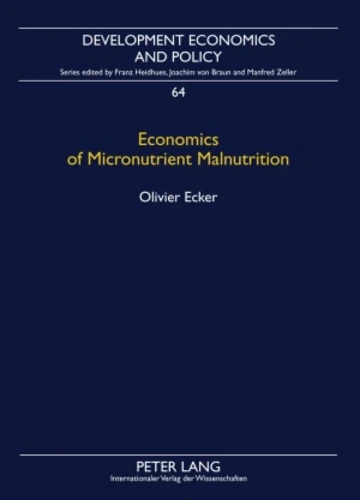
Economics of Micronutrient Malnutrition. The Demand for Nutrients in Sub-Saharan Africa
Par :Formats :
- Paiement en ligne :
- Livraison à domicile ou en point Mondial Relay estimée à partir du 18 novembreCet article sera commandé chez un fournisseur et vous sera envoyé 127 jours après la date de votre commande.
- Retrait Click and Collect en magasin gratuit
- Livraison à domicile ou en point Mondial Relay estimée à partir du 18 novembre
- Réservation en ligne avec paiement en magasin :
- Indisponible pour réserver et payer en magasin
- Nombre de pages169
- ISBN978-3-631-59505-3
- EAN9783631595053
- Date de parution01/09/2009
- CollectionDevelopment Economics and Poli
- ÉditeurPeter Lang
Résumé
Micronutrient malnutrition is a serious public health problem, especially in developing countries. Hence, evaluating the nutritional impacts of market and policy changes requires more than just a calorie focus. This work extends the traditional perspective and analyzes the effects of income, food price, and sociodemographic developments on vitamin and mineral adequacies at the household level. The author proposes two approaches to estimate income and price elasticities of nutrient consumption and presents a procedure for assessing the nutrition situation in populations based on food consumption data.
Using both approaches demand models are applied in two empirical studies with data from rural East Africa and Malawi. Results suggest that the nutritional status is highly income-responsive. Price elasticities are lower in absolute values, albeit with notable differences between nutrients. Policy implications are discussed.
Using both approaches demand models are applied in two empirical studies with data from rural East Africa and Malawi. Results suggest that the nutritional status is highly income-responsive. Price elasticities are lower in absolute values, albeit with notable differences between nutrients. Policy implications are discussed.