SOLDES
Jusqu'à -70% sur une sélection d'articles*

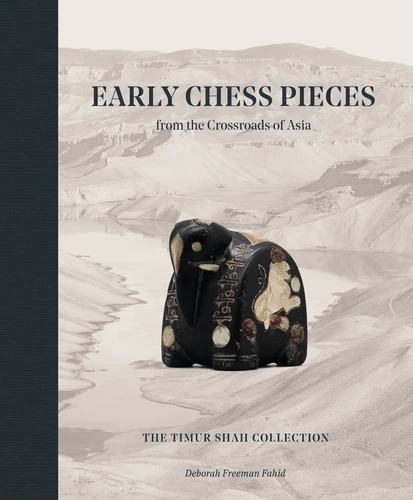
Early Chess Pieces from the Crossroads of Asia. The Timur Shah Collection
Par :Formats :
- Paiement en ligne :
- Livraison à domicile ou en point Mondial Relay estimée à partir du 24 novembreCet article sera commandé chez un fournisseur et vous sera envoyé 127 jours après la date de votre commande.
- Retrait Click and Collect en magasin gratuit
- Livraison à domicile ou en point Mondial Relay estimée à partir du 24 novembre
- Réservation en ligne avec paiement en magasin :
- Indisponible pour réserver et payer en magasin
- Nombre de pages168
- FormatGrand Format
- PrésentationRelié
- Poids0.888 kg
- Dimensions22,1 cm × 26,7 cm × 1,9 cm
- ISBN978-1-915401-21-2
- EAN9781915401212
- Date de parution19/06/2026
- ÉditeurPaul Holberton Publishing
Résumé
Ces rares pièces d'échecs conservées offrent un aperçu extraordinaire des cultures qui ont façonné les origines du jeu. Datant du VIIe au XIIe siècles et sculptées dans le bois, l'ivoire et des pierres dures lumineuses, ces pièces ne sont pas seulement les premiers témoins d'un passetemps universel, mais aussi de magnifiques oeuvres miniatures de sculpture figurative et abstraite. The game of chess originated in north India, but was taken up and developed by the Persian Sasanians, the last great pre-Islamic empire of the East, who ruled over parts of Afghanistan and Central Asia from the 3rd century.
Up to the Arab Muslim invasions of the 7th century and beyond, this region was notable for a rich blend of cultural influences resulting from invasions from West and East – Greeks, Indians, Kushans, Iranians, and Huns. Many of these traits can be observed in some fascinating early figural chess pieces in this volume : an extraordinary wooden King or ‘Queen' depicts a rampaging war elephant with two human figures, barely clinging to its body, while a third is trampled underfoot ; another tiny ivory elephant, only 3.4 cm high, standing on a base decorated with a pearl border, a classic Sasanian motif, is probably a chess ‘bishop' – the modern term a convoluted derivation from the Persian word for the animal – pil.
This survey also features a large group of chessmen carved in abstract shapes – the form of chess set that prevailed in Islamic lands from the 8th to the 15th century. It features a surprising number of pieces made from elephant ivory, including two of the largest pieces ever recorded by the author, and at least three partial sets (the opposing side would have been made from a precious hardwood such as ebony).
According to early texts, the first chessmen used in India were coloured red and green but physical evidence is virtually unknown. An exciting discovery in this collection are two pieces carved from red-coloured stones : a rook made of dark red jasper, and a king made from a red-coloured conglomerate. Both appear to be of the earliest type, dating to around the 8th century. Other beautiful objects include a number of pawns or backgammon pieces made from coloured hardstones such as lapis lazuli, jade and chalcedony.
This remarkable collection of previously unpublished chess pieces was assembled in the second half of the 20th century from places close to the owner's homeland of Afghanistan. The book hopes to focus attention on a large group of pieces from a wide area that provide insights into the ancient cultures that produced them.
Up to the Arab Muslim invasions of the 7th century and beyond, this region was notable for a rich blend of cultural influences resulting from invasions from West and East – Greeks, Indians, Kushans, Iranians, and Huns. Many of these traits can be observed in some fascinating early figural chess pieces in this volume : an extraordinary wooden King or ‘Queen' depicts a rampaging war elephant with two human figures, barely clinging to its body, while a third is trampled underfoot ; another tiny ivory elephant, only 3.4 cm high, standing on a base decorated with a pearl border, a classic Sasanian motif, is probably a chess ‘bishop' – the modern term a convoluted derivation from the Persian word for the animal – pil.
This survey also features a large group of chessmen carved in abstract shapes – the form of chess set that prevailed in Islamic lands from the 8th to the 15th century. It features a surprising number of pieces made from elephant ivory, including two of the largest pieces ever recorded by the author, and at least three partial sets (the opposing side would have been made from a precious hardwood such as ebony).
According to early texts, the first chessmen used in India were coloured red and green but physical evidence is virtually unknown. An exciting discovery in this collection are two pieces carved from red-coloured stones : a rook made of dark red jasper, and a king made from a red-coloured conglomerate. Both appear to be of the earliest type, dating to around the 8th century. Other beautiful objects include a number of pawns or backgammon pieces made from coloured hardstones such as lapis lazuli, jade and chalcedony.
This remarkable collection of previously unpublished chess pieces was assembled in the second half of the 20th century from places close to the owner's homeland of Afghanistan. The book hopes to focus attention on a large group of pieces from a wide area that provide insights into the ancient cultures that produced them.