SOLDES
Jusqu'à -70% sur une sélection d'articles*

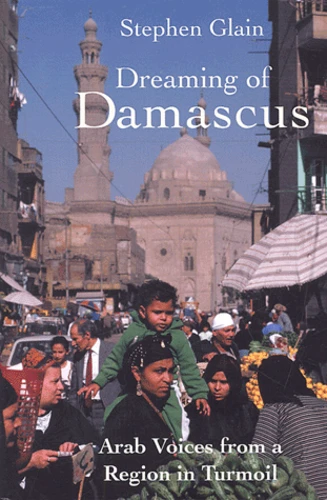
Dreaming Of Damascus. Arab Voices From A Region In Turmoil
Par :Formats :
- Paiement en ligne :
- Livraison à domicile ou en point Mondial Relay estimée à partir du 24 novembreCet article sera commandé chez un fournisseur et vous sera envoyé 127 jours après la date de votre commande.
- Retrait Click and Collect en magasin gratuit
- Livraison à domicile ou en point Mondial Relay estimée à partir du 24 novembre
- Réservation en ligne avec paiement en magasin :
- Indisponible pour réserver et payer en magasin
- Nombre de pages306
- PrésentationRelié
- Poids0.64 kg
- Dimensions16,0 cm × 24,0 cm × 3,0 cm
- ISBN0-7195-5543-4
- EAN9780719555435
- Date de parution06/03/2003
- ÉditeurJohn Murray
Résumé
A thousand years ago, a vast Arab empire stretched from the Asian steppe across the Mediterranean to Spain, pioneering new technologies, sciences, art and culture. Arab traders and Arab currencies dominated the global economy the way Western multinationals and the dollar do today. A thousand years later, Arab states are in decay. Official corruption and ineptitude have eroded state authority and created a vacuum that militant Islam - with its schools, hospitals and other civic services - has rushed to fill. In Dreaming of Damascus, Stephen Glain distills his experience as The Wall Street Journal's Middle East correspondent into a poignant and intimate account of how the Arab world - once the spearhead of what we call globalization - may collapse in the absence of badly needed reform. Glain takes us on a journey through the heart of what were once the great Islamic caliphates, the countries now known as Lebanon, Syria, Jordan, Israel/Palestine, Iraq and Egypt, to illustrate how a once prosperous and enlightened civilization finds itself at a crossroad between Dark Age and New Dawn. As late as a century ago, what we call the Levant was a prosperous trading bloc. By carving the region into proxy states and emirates after the First World War, the Western powers Balkanized and undermined the Levantine economy. That in turn prepared the ground for a regional autocracy that rejected economic openness and religious tolerance, qualities that had made the old Islamic caliphates great. Today the Arab world has opted out of the global economy, with tragic consequences. It is up to the new generation of leaders - and the Western governments that created the modern Middle East - to reverse the sclerosis and revive the region.