
Alfred Hiatt is Professor of Medieval Studies in the Department of English at Queen Mary University of London. His research interests include maps and geographical writing, the reception of the classical tradition in the Middle Ages, and forgery and the reception of forgeries.
Dislocations: Maps, Classical Tradition, and Spatial Play in the European Middle Ages
Par :Formats :
- Paiement en ligne :
- Livraison à domicile ou en point Mondial Relay estimée à partir du 4 janvierCet article sera commandé chez un fournisseur et vous sera envoyé 127 jours après la date de votre commande.
- Retrait Click and Collect en magasin gratuit
- Nombre de pages347
- PrésentationRelié
- Poids0.8 kg
- Dimensions15,2 cm × 22,9 cm × 0,0 cm
- ISBN978-0-88844-218-5
- EAN9780888442185
- Date de parution19/05/2020
- CollectionStudies and texts
- ÉditeurPIMS
Résumé
In Europe, during the Middle Ages, classical Greek and Roman geography continued to provide the fundamental structure for knowing the world's places and peoples. From encyclopedic compendia such as the Natural History of Pliny the Elder and its redaction in Julius Solinus's Polyhistor to the works of canonical Roman poets such as Virgil, Ovid, and Lucan, the geographical content of antique texts invited study and explication.
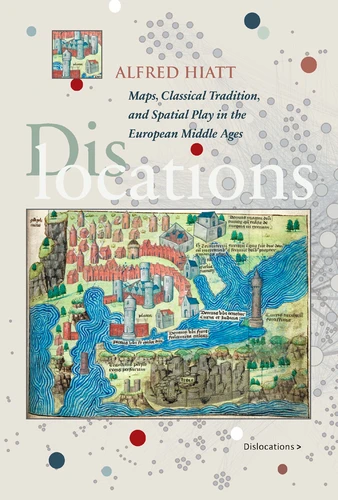
Yet medieval authors well knew that classical spatial order, itself full of lacunae, only infrequently corresponded to their own reality. Dislocations : Maps, Classical Tradition, and Spatial Play in the European Middle Ages considers the ways in which medieval and, later, humanist geography absorbed and reinvented classical spatial models in order to address key questions of historical change, migration, and emerging national, regional, and linguistic identities.
Drawing on a wide range of literary texts, maps, and geographical descriptions – and utilising the ancient but now largely discarded scholarly genre of the dialogue – Dislocations argues that medieval spatial representation was complex and richly textured, whether in the form of a careful gloss in a manuscript of Lucan's Civil War, or as the exuberant sexualized allegories of the fourteenth-century papal notary Opicinus de Canistris.
The book also explores a further kind of dislocation : the surprising connections between medieval geographical thought and twentieth- and twenty-first-century visual arts, including Dadaism and the remarkable Mappamundi Suite of the Gujarati artist Gulammohammed Sheikh. While past spatial orders may be relegated to obscurity, they just as often linger – in archives, memories, and ruins – to be retrieved and reanimated in revealing ways.
Yet medieval authors well knew that classical spatial order, itself full of lacunae, only infrequently corresponded to their own reality. Dislocations : Maps, Classical Tradition, and Spatial Play in the European Middle Ages considers the ways in which medieval and, later, humanist geography absorbed and reinvented classical spatial models in order to address key questions of historical change, migration, and emerging national, regional, and linguistic identities.
Drawing on a wide range of literary texts, maps, and geographical descriptions – and utilising the ancient but now largely discarded scholarly genre of the dialogue – Dislocations argues that medieval spatial representation was complex and richly textured, whether in the form of a careful gloss in a manuscript of Lucan's Civil War, or as the exuberant sexualized allegories of the fourteenth-century papal notary Opicinus de Canistris.
The book also explores a further kind of dislocation : the surprising connections between medieval geographical thought and twentieth- and twenty-first-century visual arts, including Dadaism and the remarkable Mappamundi Suite of the Gujarati artist Gulammohammed Sheikh. While past spatial orders may be relegated to obscurity, they just as often linger – in archives, memories, and ruins – to be retrieved and reanimated in revealing ways.