SOLDES
Jusqu'à -70% sur une sélection d'articles*

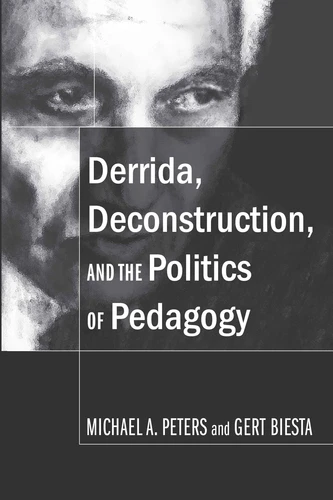
Derrida, Deconstruction, and the Politics of Pedagogy
Par : ,Formats :
- Paiement en ligne :
- Livraison à domicile ou en point Mondial Relay estimée à partir du 9 novembreCet article sera commandé chez un fournisseur et vous sera envoyé 127 jours après la date de votre commande.
- Retrait Click and Collect en magasin gratuit
- Livraison à domicile ou en point Mondial Relay estimée à partir du 9 novembre
- Réservation en ligne avec paiement en magasin :
- Indisponible pour réserver et payer en magasin
- Nombre de pages150
- ISBN978-1-4331-0009-3
- EAN9781433100093
- Date de parution01/12/2008
- CollectionCounterpoints
- ÉditeurPeter Lang
Résumé
Jacques Derrida is, arguably, the foremost philosopher of the humanities and their place in the university. Over his long career he was concerned with the humanities' fate, status, place, and contribution. Through his deconstructive readings and writings, Derrida reinvented the Western tradition by attending closely to those texts which constitute it. He redefined its procedures and protocols, questioning and commenting upon the relationship between commentary and interpretation, the practice of quotation, the delimitation of a work and its singularity, its signature, and its context : the whole form of life of literary culture, together with the textual practices and conventions that shape it.
From early in his career, Derrida occupied a marginal in-between space – simultaneously textual, literary, philosophical, and political – a space that permitted him a freedom to question, to speculate, and to draw new limits to humanitas. With an up-to-date synopsis, review, and critique of his writings, this book demonstrates Derrida's almost singular power to reconceptualize and reimagine the humanities, and examines his humanism in relation to politics and pedagogy.
From early in his career, Derrida occupied a marginal in-between space – simultaneously textual, literary, philosophical, and political – a space that permitted him a freedom to question, to speculate, and to draw new limits to humanitas. With an up-to-date synopsis, review, and critique of his writings, this book demonstrates Derrida's almost singular power to reconceptualize and reimagine the humanities, and examines his humanism in relation to politics and pedagogy.