
Tauel Harper has published articles on democracy and new technology as well as the importance of experimentation in play. He currently lectures in communication studies at the University of Western Australia.
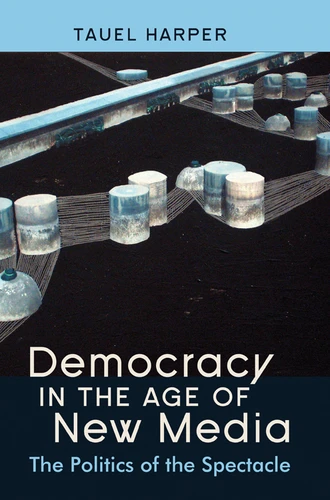
Democracy in the Age of New Media. The Politics of the Spectacle
Par :Formats :
- Nombre de pages179
- ISBN978-1-4331-0910-2
- EAN9781433109102
- Date de parution01/02/2011
- ÉditeurPeter Lang
Résumé
In the age of the spectacle, democracy has never looked so bleak. Our world, saturated with media and marketing, endlessly confronts us with spectacles vying for our attention : from Apple and 9/11 to Facebook and the global financial crisis. Democratic politics, by comparison, remain far from engaging. A society obsessed with spectacles results in a complete misfiring of the democratic system. This book uses critical democratic theory to outline the effects of consumer culture on citizenship.
It highlights the importance that public space plays in creating the critical culture necessary for a healthy democracy, and outlines how contemporary ‘public' spaces – shopping centres, the Internet, social networking sites and suburban communities – contribute to this culture. Terrorism, ecological destruction and the financial crisis are also outlined as symptoms of the politics of the spectacle.
The book concludes with some basic principles and novel suggestions which could be employed to avoid the pitfalls inherent in our spectacular existence.
It highlights the importance that public space plays in creating the critical culture necessary for a healthy democracy, and outlines how contemporary ‘public' spaces – shopping centres, the Internet, social networking sites and suburban communities – contribute to this culture. Terrorism, ecological destruction and the financial crisis are also outlined as symptoms of the politics of the spectacle.
The book concludes with some basic principles and novel suggestions which could be employed to avoid the pitfalls inherent in our spectacular existence.