

Seth Weidman is a data scientist who splits his time between solving machine learning problems at Facebook, and contributing to the PyTorch tutorials, examples. and developer experience. He previously applied machine learning at Trunk Club and later taught machine learning and deep learning for the corporate training team at Metis. Seth is passionate about trying to explain complex concepts simply.
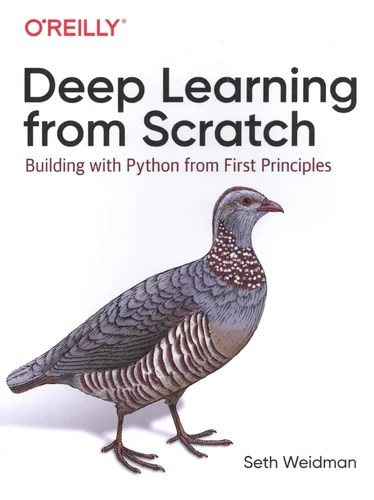
Deep Learning from Scratch. Building with Python from First Principles
Par :Formats :
- Paiement en ligne :
- Livraison à domicile ou en point Mondial Relay estimée à partir du 7 octobreCet article sera commandé chez un fournisseur et vous sera envoyé 25 jours après la date de votre commande.
- Retrait Click and Collect en magasin gratuit
- Nombre de pages235
- FormatGrand Format
- PrésentationBroché
- Poids0.439 kg
- Dimensions17,9 cm × 23,3 cm × 2,1 cm
- ISBN978-1-4920-4141-2
- EAN9781492041412
- Date de parution31/10/2019
- ÉditeurO'Reilly
Résumé
With the resurgence of neural networks in the 2010s, understanding deep learning has become essential for machine learning practitioners and even many software engineers. This practical book provides a thorough introduction for data scientists and software engineers with previous exposure to machine learning. You'll start with deep learning basics and move quickly to the details of important advanced architectures, implementing everything from scratch along the way.
Author Seth Weidman shows you how neural networks function using a first principles approach. You'll learn how to apply multilayer neural networks, convolutional neural networks, and recurrent neural networks from the ground up. With a detailed understanding of how these networks work mathematically, computationally, and conceptually, you'll be setup for success on future deep learning projects.
Author Seth Weidman shows you how neural networks function using a first principles approach. You'll learn how to apply multilayer neural networks, convolutional neural networks, and recurrent neural networks from the ground up. With a detailed understanding of how these networks work mathematically, computationally, and conceptually, you'll be setup for success on future deep learning projects.