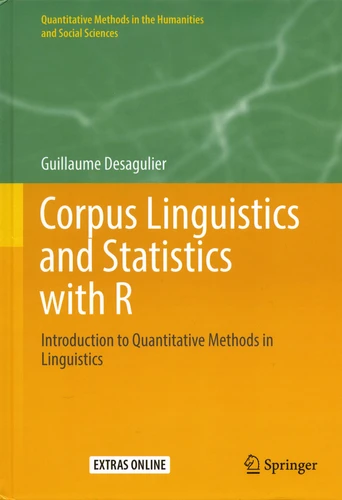
This textbook examines empirical linguistics from a theoretical linguist's perspective. It provides both a theoretical discussion of what quantitative corpus linguistics entails and detailed, hands-on, step-by-step instructions to implement the techniques in the field. The statistical methodology and R-based coding from this book teach readers the basic and then more advanced skills to work with large data sets in their linguistics research and studies.
Massive data sets are now more than ever the basis for work that ranges from usage-based linguistics to the far reaches of applied linguistics. This book presents much of the methodology in a corpus-based approach. However, the corpus-based methods in this book are also essential components of recent developments in sociolinguistics, historical linguistics, computational linguistics, and psycholinguistics.
Material from the book will also be appealing to researchers in digital humanities and the many nonlinguistic fields that use textual data analysis and text-based sensorimetrics. Chapters cover topics including corpus processing, frequencing data, and clustering methods. Case studies illustrate each chapter with accompanying data sets, R code, and exercises for use by readers. This book may be used in advanced undergraduate courses, graduate courses, and self-study.
This textbook examines empirical linguistics from a theoretical linguist's perspective. It provides both a theoretical discussion of what quantitative corpus linguistics entails and detailed, hands-on, step-by-step instructions to implement the techniques in the field. The statistical methodology and R-based coding from this book teach readers the basic and then more advanced skills to work with large data sets in their linguistics research and studies.
Massive data sets are now more than ever the basis for work that ranges from usage-based linguistics to the far reaches of applied linguistics. This book presents much of the methodology in a corpus-based approach. However, the corpus-based methods in this book are also essential components of recent developments in sociolinguistics, historical linguistics, computational linguistics, and psycholinguistics.
Material from the book will also be appealing to researchers in digital humanities and the many nonlinguistic fields that use textual data analysis and text-based sensorimetrics. Chapters cover topics including corpus processing, frequencing data, and clustering methods. Case studies illustrate each chapter with accompanying data sets, R code, and exercises for use by readers. This book may be used in advanced undergraduate courses, graduate courses, and self-study.