John Walsh is a Lecturer in Irish at the School of Languages, Literatures and Cultures, National University of Ireland, Galway. He has previously worked as a lecturer at Dublin City University, with the European Bureau for Lesser-Used Languages, and as a journalist with the Irish state broadcaster RTE and the Irish-language television channel TG4. In 2009 he was appointed Fulbright Irish Language Scholar and spent six months teaching and researching at the University of California, Santa Cruz.
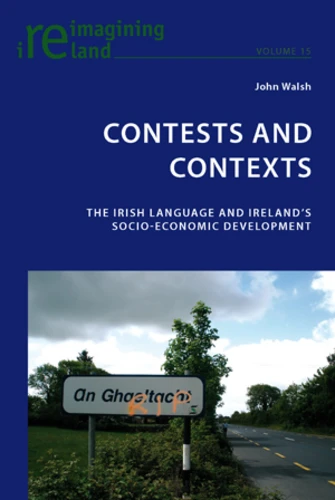
Contests and Contexts. The Irish Language and Ireland’s Socio-Economic Development
Par :Formats :
- Paiement en ligne :
- Livraison à domicile ou en point Mondial Relay estimée à partir du 2 octobreCet article sera commandé chez un fournisseur et vous sera envoyé 25 jours après la date de votre commande.
- Retrait Click and Collect en magasin gratuit
- Nombre de pages468
- ISBN978-3-03911-914-1
- EAN9783039119141
- Date de parution01/11/2010
- CollectionReimagining Ireland
- ÉditeurPeter Lang
Résumé
Despite being Ireland's national and first official language, Irish is marginalised and threatened as a community language. The dominant discourse has long dismissed the Irish language as irrelevant or even an obstacle to Ireland's progress. This book critiques that discourse and contends that the promotion of Irish and sustainable socio-economic development are not mutually exclusive aims. The author surveys historical and contemporary sources, particularly those used by the Irish historian J.J.
Lee, and argues that the Irish language contributes positively to socio-economic development. He grounds this argument in theoretical perspectives from sociolinguistics, political economy and development theory, and suggests a new theoretical framework for understanding the relationship between language and development. The link between the Irish language and Ireland's socio-economic development is examined in a number of case studies, both within the traditional Irish-speaking Gaeltacht communities and in urban areas.
Following the spectacular collapse of the Irish economy in 2008, this critical challenge to the dominant discourse on development is a timely and thought-provoking study.
Lee, and argues that the Irish language contributes positively to socio-economic development. He grounds this argument in theoretical perspectives from sociolinguistics, political economy and development theory, and suggests a new theoretical framework for understanding the relationship between language and development. The link between the Irish language and Ireland's socio-economic development is examined in a number of case studies, both within the traditional Irish-speaking Gaeltacht communities and in urban areas.
Following the spectacular collapse of the Irish economy in 2008, this critical challenge to the dominant discourse on development is a timely and thought-provoking study.