

Liz Rice is Chief Open Source Officer at Isovalent, chair of the CNCF's Technical Oversight Committee, and served as co-chair of the KubeCon + CloudNativeCon 2018 events in Copenhagen. Shanghai, and Seattle.
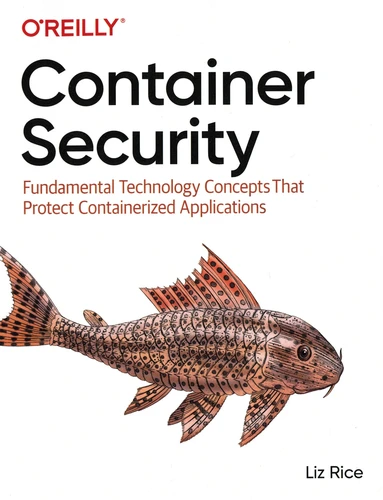
Container Security. Fundamental Technology Concepts That Protect Containerized Applications
Par :Formats :
- Nombre de pages182
- FormatGrand Format
- PrésentationBroché
- Poids0.362 kg
- Dimensions17,4 cm × 23,1 cm × 1,2 cm
- ISBN978-1-4920-5670-6
- EAN9781492056706
- Date de parution12/05/2020
- ÉditeurO'Reilly
Résumé
To facilitate scalability and resilience, many organizations now run applications in cloud native environments using containers and orchestration. But how do you know if the deployment is secure ? This practical book examines key underlying technologies to help developers, operators, and security professionals assess security risks and determine appropriate solutions. Author Liz Rice, Chief Open Source Officer at Isovalent, looks at how the building blocks commonly used in container-based systems are constructed in Linux.
You'll understand what's happening when you deploy containers and learn how to assess potential security risks that could affect your deployments. If you run container applications with kubectl or docker and use Linux command-line tools such as ps and prep, you're ready to get started. - Explore attack vectors that affect container deployments - Dive into the Linux constructs that underpin containers - Examine measures for hardening containers - Understand how misconfigurations can compromise container isolation - Learn best practices for building container images - Identify container images that have known software vulnerabilities - Leverage secure connections between containers - Use security tooling to prevent attacks on your deployment.
You'll understand what's happening when you deploy containers and learn how to assess potential security risks that could affect your deployments. If you run container applications with kubectl or docker and use Linux command-line tools such as ps and prep, you're ready to get started. - Explore attack vectors that affect container deployments - Dive into the Linux constructs that underpin containers - Examine measures for hardening containers - Understand how misconfigurations can compromise container isolation - Learn best practices for building container images - Identify container images that have known software vulnerabilities - Leverage secure connections between containers - Use security tooling to prevent attacks on your deployment.