
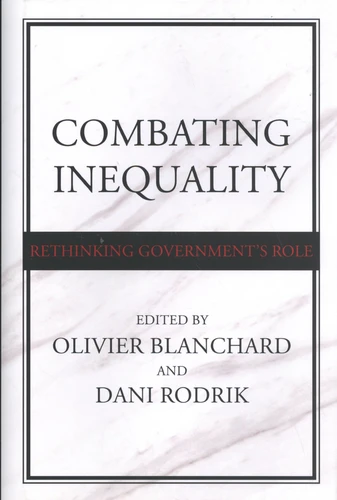
Olivier BLANCHARD is C. Fred Bergsten Senior Fellow at the Peterson Institute for International Economics and Robert Solow Professor of Economics Emeritus at MIT. He was Chief Economist at the International Monetary Fund from 2008 to 2015. Dani RODRIK is Ford Foundation Professor of International Political Economy at Harvard's John F. Kennedy School of Government and President-Elect of the International Economic Association.
Combating Inequality. Rethinking Government's Role
Par : ,Formats :
- Paiement en ligne :
- Livraison à domicile ou en point Mondial Relay indisponible
- Retrait Click and Collect en magasin gratuit
- Réservation en ligne avec paiement en magasin :
- Indisponible pour réserver et payer en magasin
- Nombre de pages287
- FormatGrand Format
- PrésentationRelié
- Poids0.605 kg
- Dimensions18,5 cm × 24,1 cm × 3,0 cm
- ISBN978-0-262-04561-2
- EAN9780262045612
- Date de parution02/02/2021
- ÉditeurMIT Press (The)
Résumé
Economic inequality is the defining issue of our time. In the United States, the wealth share of the top 1% has risen from 25% in the late 1970s to around 40% today. The percentage of children earning more than their parents has fallen from 90% in the 1940s to around 50% today. In Combating Inequality, leading economists, many of them current or former policymakers, bring good news : we have the tools to reverse the rise in inequality.
In their discussions, they consider which of these tools are the most effective at doing so. The contributors express widespread agreement that we need to aim policies at economic inequality itself ; deregulation and economic stimulus will not do the job. No longer does anyone ask, in relation to expanded social programs, "Can we pay for it ? " And most believe that US taxes will have to rise - although they debate whether the progressivity should focus on the revenue side or the expenditure side, through broad-based taxes like the VAT or through a wealth tax aimed at the very top of the income scale.
They also consider the philosophical aspects of inequality - whether it is bad in itself or because of its consequences ; the risks and benefits of more radical interventions to change the nature of production and trade ; and future policy directions.
In their discussions, they consider which of these tools are the most effective at doing so. The contributors express widespread agreement that we need to aim policies at economic inequality itself ; deregulation and economic stimulus will not do the job. No longer does anyone ask, in relation to expanded social programs, "Can we pay for it ? " And most believe that US taxes will have to rise - although they debate whether the progressivity should focus on the revenue side or the expenditure side, through broad-based taxes like the VAT or through a wealth tax aimed at the very top of the income scale.
They also consider the philosophical aspects of inequality - whether it is bad in itself or because of its consequences ; the risks and benefits of more radical interventions to change the nature of production and trade ; and future policy directions.
A propos de Olivier Blanchard

Pour l'emploi et la cohésion sociale - Occasion
Grand Format
1,90 €
24,48 €

Pour l'emploi et la cohésion sociale
Grand Format
9,50 €