SOLDES
Jusqu'à -70% sur une sélection d'articles*

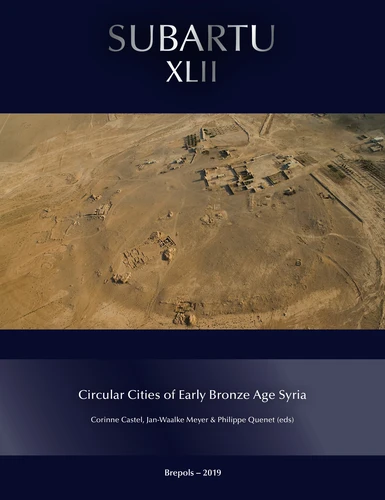
Circular Cities of Early Bronze Age Syria
Par : , ,Formats :
- Paiement en ligne :
- Livraison à domicile ou en point Mondial Relay estimée à partir du 19 novembreCet article sera commandé chez un fournisseur et vous sera envoyé 127 jours après la date de votre commande.
- Retrait Click and Collect en magasin gratuit
- Livraison à domicile ou en point Mondial Relay estimée à partir du 19 novembre
- Réservation en ligne avec paiement en magasin :
- Indisponible pour réserver et payer en magasin
- Nombre de pages398
- PrésentationBroché
- Poids1.71 kg
- Dimensions21,6 cm × 28,0 cm × 0,0 cm
- ISBN978-2-503-55183-8
- EAN9782503551838
- Date de parution03/08/2020
- CollectionSubartu
- ÉditeurBrepols
Résumé
This volume corresponds to the acts of a conference that closes the international interdisciplinary research project Badiyah, directed by Corinne Castel and Jan-Waalke Meyer (Directors of the Tell Al-Rawda and Tell Chuera archaeological missions). Both sites illustrate the importance of the 3rd millennium BCE ‘circular cities' discovered in today's Syria. These pre-planned cities were fortified and organized following a concentric and radial urban pattern.
They represent a particular form of the endogenous process of urbanization that appeared in this region when the first cities and territorial states emerged. The main results obtained from these two sites are compared to other Syrian ‘circular cities' of the Early Bronze Age. Twenty-nine contributions enable us to reassess the process of urbanization in the Near East and to question the Southern Mesopotamian model as the unique cradle of urban civilization.
They represent a particular form of the endogenous process of urbanization that appeared in this region when the first cities and territorial states emerged. The main results obtained from these two sites are compared to other Syrian ‘circular cities' of the Early Bronze Age. Twenty-nine contributions enable us to reassess the process of urbanization in the Near East and to question the Southern Mesopotamian model as the unique cradle of urban civilization.