
Pnina Arad is a research fellow at the Center for the Study of Conversion and Interreligious Encounters at Ben-Gurion University. Her publications focus on visual representations of the Holy Land and the cultural role they have played for different societies from the Middle Ages to the present.
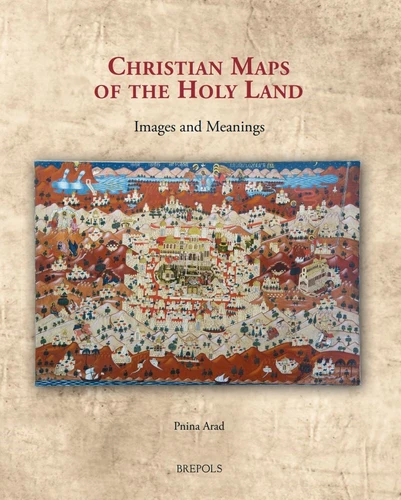
Christian Maps of the Holy Land. Images and Meanings
Par :Formats :
- Paiement en ligne :
- Livraison à domicile ou en point Mondial Relay estimée à partir du 18 septembreCet article sera commandé chez un fournisseur et vous sera envoyé 25 jours après la date de votre commande.
- Retrait Click and Collect en magasin gratuit
- Réservation en ligne avec paiement en magasin :
- Indisponible pour réserver et payer en magasin
- Nombre de pages176
- PrésentationBroché
- Poids0.83 kg
- Dimensions21,6 cm × 28,0 cm × 0,0 cm
- ISBN978-2-503-58526-0
- EAN9782503585260
- Date de parution16/07/2020
- CollectionCultural Encounters in Late An
- ÉditeurBrepols
Résumé
This book offers a way of reading maps of the Holy Land as visual imagery with religious connotations. Through a corpus of representative examples created between the sixth and the nineteenth centuries, it studies the maps as iconic imagery of an iconic landscape and analyses their strategies to manifest the spiritual quality of the biblical topography, to support religious tenets, and to construct and preserve cultural memory.
Maps of the Holy Land have thus far been studied with methodologies such as cartography and historical geography, while the main question addressed was the reliability of the maps as cartographic documents. Through another perspective and using the methodology of visual studies, this book reveals that maps of the Holy Land constructed religious messages and were significant instruments through which different Christian cultures (Byzantine, Catholic, Protestant, and Greek Orthodox) shaped their religious identities.
It does not seek to ascertain how the maps delivered geographical information, but rather how they utilized the geographical information in formulating religious and cultural values. Through its examination of maps of the Holy Land, this book thus explores both Christian visual culture and Christian spirituality throughout the centuries.
Maps of the Holy Land have thus far been studied with methodologies such as cartography and historical geography, while the main question addressed was the reliability of the maps as cartographic documents. Through another perspective and using the methodology of visual studies, this book reveals that maps of the Holy Land constructed religious messages and were significant instruments through which different Christian cultures (Byzantine, Catholic, Protestant, and Greek Orthodox) shaped their religious identities.
It does not seek to ascertain how the maps delivered geographical information, but rather how they utilized the geographical information in formulating religious and cultural values. Through its examination of maps of the Holy Land, this book thus explores both Christian visual culture and Christian spirituality throughout the centuries.