
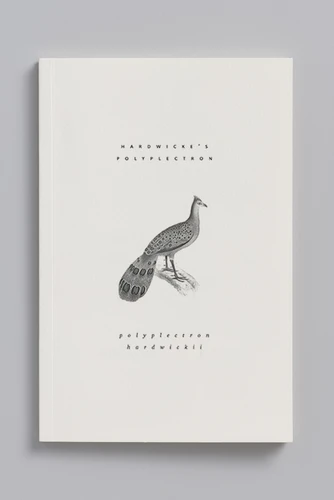
Thomas Hardwicke (1756-1835) est un soldat et naturaliste anglais affecté en Inde en 1777-1823. Il se consacre sur place à la recherche de spécimens d'espèces locales encore inconnues en Europe, qui seront ensuite dessinés par des artistes indiens. A son retour en Angleterre avec 4 500 illustrations, il en sélectionne 202 avec son collaborateur J. E. Gray pour les publier sous le titre Illustrations of Indian Zoology.
Carnet Animal aquatique - Eperonnier malais
Par :Formats :
- Paiement en ligne :
- Livraison à domicile ou en point Mondial Relay estimée à partir du 8 octobreCet article sera commandé chez un fournisseur et vous sera envoyé 23 jours après la date de votre commande.
- Retrait Click and Collect en magasin gratuit
- Réservation en ligne avec paiement en magasin :
- Indisponible pour réserver et payer en magasin
- Nombre de pages74
- FormatPoche
- PrésentationBroché
- Poids0.116 kg
- Dimensions12,4 cm × 19,1 cm × 0,7 cm
- ISBN979-10-96554-95-9
- EAN9791096554959
- Date de parution07/11/2019
- ÉditeurReliefs (revue)
Résumé
Polyplectron hardwickii : L'éperonnier malais ou "éperonnier de Hardwicke" est une espèce de faisan endémique de la péninsule malaise. Les mâles se distinguent par leur huppe bleu-vert plus longue, alors que les femelles portent une crête plus discrète. Leur queue est ornée d'ocelles bleu-vert métallique. L'éperonnier vit dans les forêts primaires de basse altitude et niche dans les sous-bois denses, souvent à proximité des rives de cours d'eau riches en petits palmiers.
Il est considéré comme vulnérable, du fait de la destruction de son habitat naturel. Polyplectron hardwickii : The Malayan peacock-pheasant, sometimes still known as "Hardwicke's peacock-pheasant", is a species endemic to the Malay Peninsula. The male bird is recognizable by the longer blue-green crest on its forehead, while the female's crest is shorter. The tail has iridescent metal blue-green eyespots.
The Malayan peacock-pheasant inhabits lowland primary forests and nests in dense undergrowth, often near banks of streams lined with small palm trees. It is considered vulnerable because of the destruction of its natural habitat. Le général Thomas Hardwicke (1756-1835) est un soldat et naturaliste anglais affecté en Inde entre 1777 et 1823. Il se consacre sur place à la recherche de spécimens d'espèces locales encore inconnues en Europe, qui seront ensuite dessinés par des artistes indiens.
A son retour en Angleterre, Hardwicke avait rassemblé 4 500 illustrations, dont 202 qui seront sélectionnées par lui-même et son collaborateur J. E. Gray pour être publiées sous le titre Illustrations of Indian Zoology. Le livre a été publié entre 1830 et 1835 et ne contient que des illustrations, Hardwicke étant décédé avant la production de la partie textuelle. Major-General Thomas Hardwicke (1756-1835) was an English soldier and naturalist who was poste in India from 1777 to 1823.
Aside from his military activities, he devoted himself to looking for specimens of local species which he afterwards asked Indian artists to draw and from which many were unknown until then. When he returned to England, Hardwicke had gathered 4, 500 illustrations, from which 202 were chosen by him and his collaborator J. E. Gray to be published under the title Illustrations of Indian Zoology. The book was published between 1830 and 1835 and contains only illustrations, Hardwicke having died before the textual part was produced.
?
Il est considéré comme vulnérable, du fait de la destruction de son habitat naturel. Polyplectron hardwickii : The Malayan peacock-pheasant, sometimes still known as "Hardwicke's peacock-pheasant", is a species endemic to the Malay Peninsula. The male bird is recognizable by the longer blue-green crest on its forehead, while the female's crest is shorter. The tail has iridescent metal blue-green eyespots.
The Malayan peacock-pheasant inhabits lowland primary forests and nests in dense undergrowth, often near banks of streams lined with small palm trees. It is considered vulnerable because of the destruction of its natural habitat. Le général Thomas Hardwicke (1756-1835) est un soldat et naturaliste anglais affecté en Inde entre 1777 et 1823. Il se consacre sur place à la recherche de spécimens d'espèces locales encore inconnues en Europe, qui seront ensuite dessinés par des artistes indiens.
A son retour en Angleterre, Hardwicke avait rassemblé 4 500 illustrations, dont 202 qui seront sélectionnées par lui-même et son collaborateur J. E. Gray pour être publiées sous le titre Illustrations of Indian Zoology. Le livre a été publié entre 1830 et 1835 et ne contient que des illustrations, Hardwicke étant décédé avant la production de la partie textuelle. Major-General Thomas Hardwicke (1756-1835) was an English soldier and naturalist who was poste in India from 1777 to 1823.
Aside from his military activities, he devoted himself to looking for specimens of local species which he afterwards asked Indian artists to draw and from which many were unknown until then. When he returned to England, Hardwicke had gathered 4, 500 illustrations, from which 202 were chosen by him and his collaborator J. E. Gray to be published under the title Illustrations of Indian Zoology. The book was published between 1830 and 1835 and contains only illustrations, Hardwicke having died before the textual part was produced.
?
A propos de Reliefs Editions

15,95 €
Carte de la France vinicole. 85 x 65 cm
Grand Format
19,00 €

Le pôle arctique. 85 x 68 cm
Grand Format
19,00 €

19,00 €

Antarctique. 85 x 68 cm
Grand Format
19,00 €

Les régions antarctiques. 68 x 85 cm
Grand Format
19,00 €
Agenda Reliefs
Edition 2027
Edition 2027
Grand Format
22,50 €


9,90 €

9,90 €