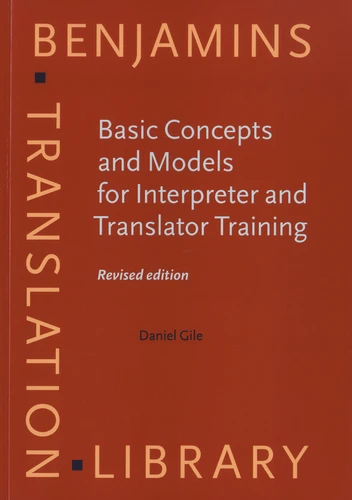
Basic Concepts and Models for Interpreter and Translator Training
édition revue et corrigée
Par : Formats :
- Paiement en ligne :
- Livraison à domicile ou en point Mondial Relay estimée à partir du 6 octobreCet article sera commandé chez un fournisseur et vous sera envoyé 25 jours après la date de votre commande.
- Retrait Click and Collect en magasin gratuit
- Nombre de pages284
- FormatGrand Format
- PrésentationBroché
- Poids0.55 kg
- Dimensions17,0 cm × 24,0 cm × 1,8 cm
- ISBN978-90-272-2432-3
- EAN9789027224323
- Date de parution01/01/2009
- CollectionBenjamins Translation Library
- ÉditeurJohn Benjamins Publishing
Résumé
Basic Concepts and Models for Interpreter and Translator Training is a systematically corrected, enhanced and updated avatar of a book (1995) which is widely used in T&I training programmes worldwide and widely quoted in the international Translation Studies community. It provides readers with the conceptual bases required to understand both the principles and recurrent issues and difficulties in professional translation and interpreting, guiding them along from an introduction to fundamental communication issues in translation to a discussion of the usefulness of research about Translation, through discussions of loyalty and fidelity issues, translation and interpreting strategies and tactics and underlying norms, ad hoc knowledge acquisition, sources of errors in translation, T&I cognition and language availability.
It takes on board recent developments as reflected in the literature and spells out and discusses links between practices and concepts in T&I and concepts and theories from cognitive psychology and psycholinguistics.
It takes on board recent developments as reflected in the literature and spells out and discusses links between practices and concepts in T&I and concepts and theories from cognitive psychology and psycholinguistics.