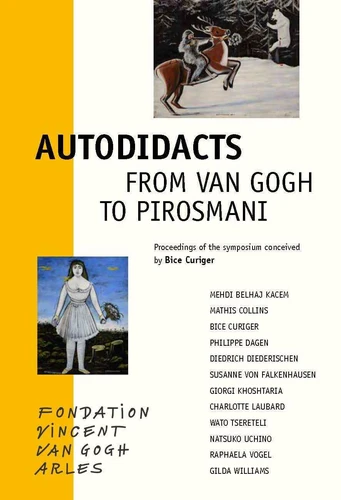
The symposium will focus on two examples of autodidacts from the nineteenth century, Vincent van Gogh (1853-1890) and Niko Pirosmani (1862-1918), as well as on the issues surrounding this notion today. The model of the autodidact appears as a figure that sheds light on our value systems and our patterns of recognition and learning in a world where different conceptions of culture coexist. Over two days, art historians, critics, writers, artists and teachers will gather to discuss autodidacticism through multiple perspectives.
The term "autodidact" is generally used to describe someone who has acquired knowledge or skills through their own reading, observations and practice - an approach that is radically different from academic study in the arts, for example, that is validated by institutions. Yet what can we possibly learn if we sacrifice brilliant cultural values on the altar of all- round relativism, where everything is equally valid ? Faced with this relativism, what does one make of the canonical in a globalised and fragmented world ? What to make of an unlearning that cripples the authority of the keepers of knowledge ? These different "cultures of knowledge" presuppose diverse geopolitical realities that are worth interrogating.
The symposium will focus on two examples of autodidacts from the nineteenth century, Vincent van Gogh (1853-1890) and Niko Pirosmani (1862-1918), as well as on the issues surrounding this notion today. The model of the autodidact appears as a figure that sheds light on our value systems and our patterns of recognition and learning in a world where different conceptions of culture coexist. Over two days, art historians, critics, writers, artists and teachers will gather to discuss autodidacticism through multiple perspectives.
The term "autodidact" is generally used to describe someone who has acquired knowledge or skills through their own reading, observations and practice - an approach that is radically different from academic study in the arts, for example, that is validated by institutions. Yet what can we possibly learn if we sacrifice brilliant cultural values on the altar of all- round relativism, where everything is equally valid ? Faced with this relativism, what does one make of the canonical in a globalised and fragmented world ? What to make of an unlearning that cripples the authority of the keepers of knowledge ? These different "cultures of knowledge" presuppose diverse geopolitical realities that are worth interrogating.