Peter Millican, Fellow and Tutor in Philosophy at Hertford College, Oxford, studied at Oxford University and has also taught at Glasgow and Leeds. His philosophical interests and publications cover a wide range but with a particular focus on Hume and related topics, especially the Enquiry, on which he also edited the collection Reading Hume on Human Understanding (OUP, 2002). He runs the website davidhume.org, and is co-editor of the journal Hume Studies.
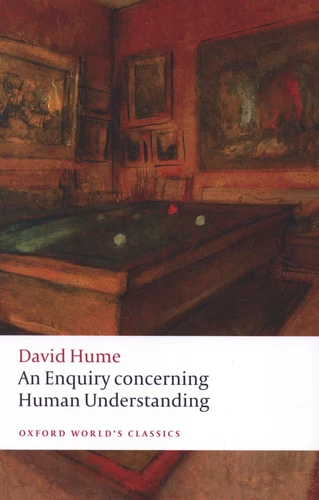
An Enquiry concerning Human Understanding
Par :Formats :
- Paiement en ligne :
- Livraison à domicile ou en point Mondial Relay estimée à partir du 7 octobreCet article sera commandé chez un fournisseur et vous sera envoyé 25 jours après la date de votre commande.
- Retrait Click and Collect en magasin gratuit
- Nombre de pages238
- FormatGrand Format
- PrésentationBroché
- Poids0.22 kg
- Dimensions13,0 cm × 20,0 cm × 1,5 cm
- ISBN978-0-19-954990-0
- EAN9780199549900
- Date de parution01/07/2008
- CollectionOxford World's Classics
- ÉditeurOxford University Press
- AnnotateurPeter Millican
Résumé
'Commit it then to the flames : For it can contain nothing but sophistry and illusion.' Thus ends David Humes Enquiry concerning Human Understanding, the definitive statement of the greatest philosopher in the English language. His arguments in support of reasoning from experience, and against the 'sophistry and illusion' of religiously inspired philosophical fantasies, caused controversy in the eighteenth century and are strikingly relevant today, when faith and science continue to clash.
The Enquiry considers the origin and processes of human thought, reaching the stark conclusion that we can have no ultimate understanding of the physical world, or indeed our own minds. In either sphere we must depend on instinctive learning from experience, recognizing our animal nature and the limits of reason. Hume's calm and open-minded scepticism thus aims to provide a new basis for science, liberating us from the 'superstition' of false metaphysics and religion.
His Enquiry remains one of the best introductions to the study of philosophy, and this edition places it in its historical and philosophical context.
The Enquiry considers the origin and processes of human thought, reaching the stark conclusion that we can have no ultimate understanding of the physical world, or indeed our own minds. In either sphere we must depend on instinctive learning from experience, recognizing our animal nature and the limits of reason. Hume's calm and open-minded scepticism thus aims to provide a new basis for science, liberating us from the 'superstition' of false metaphysics and religion.
His Enquiry remains one of the best introductions to the study of philosophy, and this edition places it in its historical and philosophical context.
A propos de David Hume
5,60 €
De la norme du goût
Poche
6,00 €
9,00 €

Lettres de suicide
Grand Format
16,00 €
On Suicide
E-book
4,99 €