OFFRE LISEUSES
Une liseuse achetée = une housse offerte* jusqu'au 21 juin

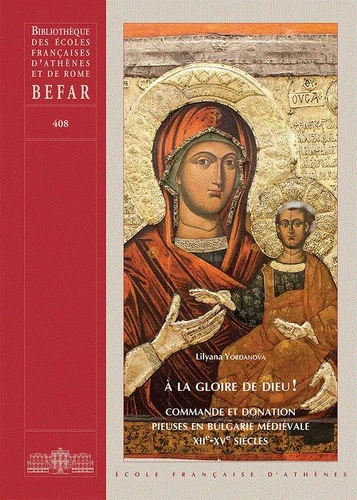
À la gloire de Dieu !. Commande et donation pieuses en Bulgarie médiévale, XIIe-XVe siècles
1e édition
Par : Formats :
Expédié sous 127 jours
Cet article sera commandé chez un fournisseur et vous sera envoyé 127 jours après la date de votre commande.
- Nombre de pages556
- PrésentationRelié
- Poids1.5 kg
- Dimensions22,0 cm × 30,0 cm × 4,0 cm
- ISBN978-2-86958-623-9
- EAN9782869586239
- Date de parution31/12/2024
- CollectionBibliothèque des Écoles França
- ÉditeurEC FR ATHENES
Résumé
Ce livre nous invite à plonger dans une exploration minutieuse du mécénat religieux, en tant que phénomène social complexe, révélant ses enchevêtrements, ses contradictions, ainsi que ses phases d'expansion et de récession. Située au coeur des Balkans, la Bulgarie médiévale, scène de l'alternance de trois empires majeurs (byzantin, bulgare et ottoman) entre le XIIe et le XVe siècle, se présente comme un champ d'étude exceptionnel et essentiel.
Nous nous interrogeons sur l'influence de la commande et de la donation dans la configuration de l'espace, le rôle de l'église, et la dynamique sociale, et inversement, comment ces éléments ont été influencés et transformés par ces pratiques dans un cycle continu d'évolution et d'ajustement. Une riche collection de ressources, souvent peu explorée, incluant des édifices, des artefacts religieux, des manuscrits et des documents, est le résultat de dix années de recherche sur le terrain et d'analyses détaillées, apportant un éclairage sur ces questions.
Ces ressources, soigneusement documentées, traduites et analysées, offrent des perspectives non seulement sur la générosité des élites et le développement du clergé, mais également sur des actes de bienfaisance plus humbles, élargissant ainsi notre compréhension des dynamiques du mécénat religieux au Moyen Age. This book invites us to dive into a meticulous exploration of pious patronage as a complex social phenomenon, revealing its various entanglements, contradictions, and phases of growth and recession over time.
The setting is Medieval Bulgaria from the 12th to the 15th century : nestled at the heart of the Balkans, this region knew the alternating rule of three Empires (Byzantine, Bulgarian, and Ottoman) and therefore stands out as a privileged field of study, a perfect vantage point from which the author approaches the dynamic interaction between the influence that pious patronage wielded upon the configuration of public spaces, reflecting its wider impact upon societal dynamics and the role of the church therein, and the new spatial, institutional and social conditions it helped bring about, in a continuous cycle of evolution and adjustment.
To the fruition of this endeavour was enlisted a rich collection of sources - often largely unexplored - such as buildings, religious artefacts, manuscripts and documents, assembled by the author as a result of a decade's worth of field research and detailed analysis. With careful documentation, translation and contextualisation this evidence sheds light not only on the generosity of the elites and the development of the clergy but onto humbler forms of benevolence, thereby broadening our understanding of religious patronage in the Late Middle Ages.
Nous nous interrogeons sur l'influence de la commande et de la donation dans la configuration de l'espace, le rôle de l'église, et la dynamique sociale, et inversement, comment ces éléments ont été influencés et transformés par ces pratiques dans un cycle continu d'évolution et d'ajustement. Une riche collection de ressources, souvent peu explorée, incluant des édifices, des artefacts religieux, des manuscrits et des documents, est le résultat de dix années de recherche sur le terrain et d'analyses détaillées, apportant un éclairage sur ces questions.
Ces ressources, soigneusement documentées, traduites et analysées, offrent des perspectives non seulement sur la générosité des élites et le développement du clergé, mais également sur des actes de bienfaisance plus humbles, élargissant ainsi notre compréhension des dynamiques du mécénat religieux au Moyen Age. This book invites us to dive into a meticulous exploration of pious patronage as a complex social phenomenon, revealing its various entanglements, contradictions, and phases of growth and recession over time.
The setting is Medieval Bulgaria from the 12th to the 15th century : nestled at the heart of the Balkans, this region knew the alternating rule of three Empires (Byzantine, Bulgarian, and Ottoman) and therefore stands out as a privileged field of study, a perfect vantage point from which the author approaches the dynamic interaction between the influence that pious patronage wielded upon the configuration of public spaces, reflecting its wider impact upon societal dynamics and the role of the church therein, and the new spatial, institutional and social conditions it helped bring about, in a continuous cycle of evolution and adjustment.
To the fruition of this endeavour was enlisted a rich collection of sources - often largely unexplored - such as buildings, religious artefacts, manuscripts and documents, assembled by the author as a result of a decade's worth of field research and detailed analysis. With careful documentation, translation and contextualisation this evidence sheds light not only on the generosity of the elites and the development of the clergy but onto humbler forms of benevolence, thereby broadening our understanding of religious patronage in the Late Middle Ages.