SOLDES
Jusqu'à -70% sur une sélection d'articles*


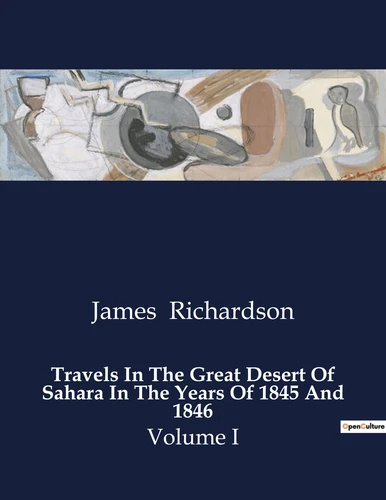
Travels In The Great Desert Of Sahara In The Years Of 1845 And 1846. Exploration and Challenges in the Sahara Desert
Par :Formats :
- Paiement en ligne :
- Livraison à domicile ou en point Mondial Relay estimée à partir du 11 aoûtCet article sera commandé chez un fournisseur et vous sera envoyé 21 jours après la date de votre commande.
- Retrait Click and Collect en magasin gratuit
- Livraison à domicile ou en point Mondial Relay estimée à partir du 11 août
- Réservation en ligne avec paiement en magasin :
- Indisponible pour réserver et payer en magasin
- Nombre de pages312
- PrésentationBroché
- Poids0.547 kg
- Dimensions17,0 cm × 22,0 cm × 2,2 cm
- ISBN979-10-419-8238-7
- EAN9791041982387
- Date de parution21/01/2024
- ÉditeurCulturea
Résumé
The narrative begins with James Richardson's ambitious plan to explore the Sahara Desert, specifically the Oasis of Ghadames, despite warnings from acquaintances about the dangers and impracticality of such a journey. Richardson's determination is fueled by a desire to contribute to the understanding of the Sahara and its people. His journey commences from the island of Jerbah, where he boards the coaster _Mesâoud_ bound for Tripoli.
The voyage is fraught with challenges, including violent winds, navigational difficulties, and the captain's breach of agreement to land at Zouwarah. Richardson describes the diverse group of passengers, including Moors, Jews, and a runaway slave named Said, highlighting their varied backgrounds and the hardships they endure during the journey. The narrative provides a vivid account of the Mediterranean's unpredictable weather and the primitive conditions aboard the small vessel.
Upon reaching Tripoli, Richardson encounters bureaucratic hurdles at the health office, reflecting the complexities of travel in the region. The text also touches on the moral and political issues of the time, such as the abolition of slavery and the role of European powers in North Africa. Richardson's journey is not just a physical exploration but also an examination of the cultural and political landscape of the Sahara and its surrounding regions.
The voyage is fraught with challenges, including violent winds, navigational difficulties, and the captain's breach of agreement to land at Zouwarah. Richardson describes the diverse group of passengers, including Moors, Jews, and a runaway slave named Said, highlighting their varied backgrounds and the hardships they endure during the journey. The narrative provides a vivid account of the Mediterranean's unpredictable weather and the primitive conditions aboard the small vessel.
Upon reaching Tripoli, Richardson encounters bureaucratic hurdles at the health office, reflecting the complexities of travel in the region. The text also touches on the moral and political issues of the time, such as the abolition of slavery and the role of European powers in North Africa. Richardson's journey is not just a physical exploration but also an examination of the cultural and political landscape of the Sahara and its surrounding regions.