American Poetry
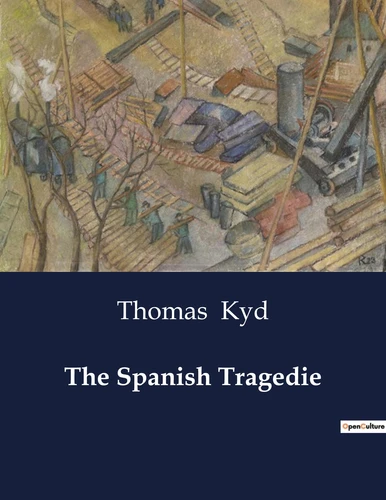
The Spanish Tragedie. A Tale of Revenge and Tragedy in the Spanish Court
Par : Formats :
- Paiement en ligne :
- Livraison à domicile ou en point Mondial Relay estimée à partir du 23 septembreCet article sera commandé chez un fournisseur et vous sera envoyé 21 jours après la date de votre commande.
- Retrait Click and Collect en magasin gratuit
- Nombre de pages100
- PrésentationBroché
- Poids0.17 kg
- Dimensions17,0 cm × 22,0 cm × 0,6 cm
- ISBN979-10-419-9583-7
- EAN9791041995837
- Date de parution03/04/2024
- ÉditeurCulturea
Résumé
"The Spanish Tragedie" by Thomas Kyd is a seminal work in the genre of Elizabethan revenge tragedy. The play unfolds in the Spanish court, where the ghost of Don Andrea, a Spanish nobleman killed in battle, seeks revenge for his untimely death. Andrea's spirit, accompanied by the personification of Revenge, observes the unfolding events from the afterlife. The narrative centers around Hieronimo, the Knight Marshal of Spain, whose son Horatio is murdered by Lorenzo and Balthazar, the latter being the son of the Viceroy of Portugal.
This murder is driven by jealousy and political intrigue, as Balthazar desires Bel-imperia, who loves Horatio. The play explores themes of justice, revenge, and the consequences of unchecked change. Hieronimo's quest for vengeance becomes the driving force of the plot, as he grapples with his grief and the desire for retribution. The murder of Horatio is a catalyst for a series of tragic events, leading Hieronimo to devise a plan to expose the murderers during a play-within-a-play, ultimately resulting in a bloody climax.
Kyd's work is notable for its complex characters and intricate plot, which reflect the societal and political tensions of the time. The play's exploration of the human psyche and the moral dilemmas faced by its characters have made it a lasting influence on the genre, paving the way for later works such as Shakespeare's "Hamlet".
This murder is driven by jealousy and political intrigue, as Balthazar desires Bel-imperia, who loves Horatio. The play explores themes of justice, revenge, and the consequences of unchecked change. Hieronimo's quest for vengeance becomes the driving force of the plot, as he grapples with his grief and the desire for retribution. The murder of Horatio is a catalyst for a series of tragic events, leading Hieronimo to devise a plan to expose the murderers during a play-within-a-play, ultimately resulting in a bloody climax.
Kyd's work is notable for its complex characters and intricate plot, which reflect the societal and political tensions of the time. The play's exploration of the human psyche and the moral dilemmas faced by its characters have made it a lasting influence on the genre, paving the way for later works such as Shakespeare's "Hamlet".