SOLDES
Jusqu'à -70% sur une sélection d'articles*

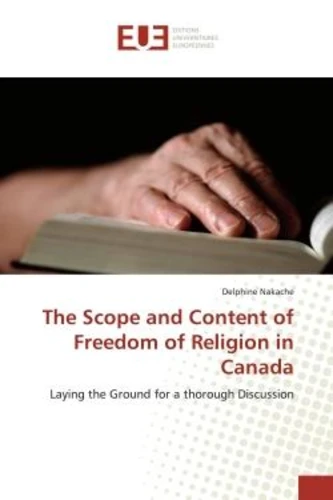
The Scope and Content of Freedom of Religion in Canada. Laying the Ground for a thorough Discussion
Par :Formats :
- Paiement en ligne :
- Livraison à domicile ou en point Mondial Relay estimée à partir du 31 juilletCet article sera commandé chez un fournisseur et vous sera envoyé 21 jours après la date de votre commande.
- Retrait Click and Collect en magasin gratuit
- Livraison à domicile ou en point Mondial Relay estimée à partir du 31 juillet
- Réservation en ligne avec paiement en magasin :
- Indisponible pour réserver et payer en magasin
- Nombre de pages112
- FormatPoche
- PrésentationBroché
- Poids0.177 kg
- Dimensions15,0 cm × 22,0 cm × 0,0 cm
- ISBN978-613-1-56436-9
- EAN9786131564369
- Date de parution19/04/2011
- CollectionOMN.UNIV.EUROP.
- ÉditeurUniv Européenne
Résumé
Despite the absence of a separation of church and state in legal texts, the Canadian state must refrain from adopting measures that have the objective or the effect of restricting a religious belief/practice and favouring one religion over another. Yet a proper understanding of state neutrality within the Canadian context calls for a cautious interpretation of this term. First, church/state separation does not necessarily entail the removal of religion from public space.
Second, given Canada''s multicultural tradition, freedom of religion has been interpreted as requesting the state to make reasonable accommodation for religious minorities if discrimination arises in the application of a norm or an otherwise legitimate public policy. Freedom of religion is not absolute, and courts have developed a two-step test to ascertain whether the infringement of the claimant''s religious freedom can be reasonably justified by state intervention.
This test is not easy to apply for front-line decision-makers routinely faced with requests for accommodation. Key legal parameters, however, are worth considering.
Second, given Canada''s multicultural tradition, freedom of religion has been interpreted as requesting the state to make reasonable accommodation for religious minorities if discrimination arises in the application of a norm or an otherwise legitimate public policy. Freedom of religion is not absolute, and courts have developed a two-step test to ascertain whether the infringement of the claimant''s religious freedom can be reasonably justified by state intervention.
This test is not easy to apply for front-line decision-makers routinely faced with requests for accommodation. Key legal parameters, however, are worth considering.