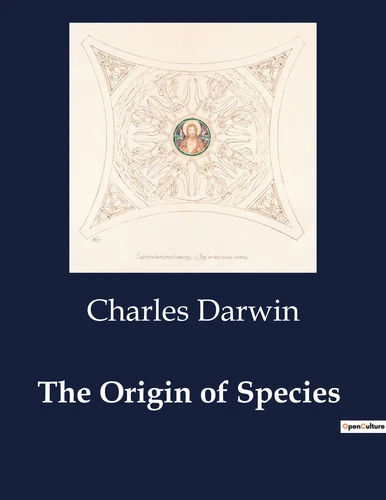
The Origin of Species. Exploring the Mechanisms of Natural Selection and Evolutionary Theory
Par :Formats :
- Nombre de pages668
- PrésentationBroché
- Poids1.148 kg
- Dimensions17,0 cm × 22,0 cm × 4,6 cm
- ISBN979-10-419-8555-5
- EAN9791041985555
- Date de parution11/02/2024
- ÉditeurCulturea
Résumé
"On the Origin of Species" by Charles Darwin is a seminal work in the field of evolutionary biology, first published in 1859. This text introduces the scientific theory that populations evolve over generations through a process of natural selection. Darwin meticulously gathered evidence from his observations during the voyage of the HMS Beagle, as well as from his extensive research and correspondence with other scientists.
The book outlines how species adapt to their environments, leading to the survival of individuals best suited to their surroundings. Darwin's theory challenged the prevailing views of the time, which largely attributed the diversity of life to divine creation. Instead, he proposed that the diversity of life arose from common ancestors through gradual changes. The work is structured to present evidence from various fields, including geology, embryology, and morphology, to support the idea of descent with modification.
Darwin's arguments are presented with a logical progression, starting from the variation observed in domesticated animals and plants, to the struggle for existence in nature, and finally to the concept of natural selection as the driving force behind evolution. The book concludes with a discussion on the implications of his theory for the understanding of the natural world. "On the Origin of Species" has had a profound impact on science and society, laying the foundation for modern evolutionary biology and influencing a wide range of disciplines.
The book outlines how species adapt to their environments, leading to the survival of individuals best suited to their surroundings. Darwin's theory challenged the prevailing views of the time, which largely attributed the diversity of life to divine creation. Instead, he proposed that the diversity of life arose from common ancestors through gradual changes. The work is structured to present evidence from various fields, including geology, embryology, and morphology, to support the idea of descent with modification.
Darwin's arguments are presented with a logical progression, starting from the variation observed in domesticated animals and plants, to the struggle for existence in nature, and finally to the concept of natural selection as the driving force behind evolution. The book concludes with a discussion on the implications of his theory for the understanding of the natural world. "On the Origin of Species" has had a profound impact on science and society, laying the foundation for modern evolutionary biology and influencing a wide range of disciplines.
A propos de Charles Darwin

On the origin of species
E-book
2,99 €
9,99 €



De Reis om de Wereld
E-book
9,99 €





The Origin Of Species (Unabridged)
Audiobook
5,49 €