The Origin of Species. A Foundational Exploration of Natural Selection and Evolutionary Theory
Par :Formats :
- Paiement en ligne :
- Livraison à domicile ou en point Mondial Relay estimée à partir du 8 septembreCet article sera commandé chez un fournisseur et vous sera envoyé 21 jours après la date de votre commande.
- Retrait Click and Collect en magasin gratuit
- Réservation en ligne avec paiement en magasin :
- Indisponible pour réserver et payer en magasin
- Nombre de pages710
- PrésentationBroché
- Poids0.902 kg
- Dimensions14,8 cm × 21,0 cm × 3,8 cm
- ISBN979-10-418-0608-9
- EAN9791041806089
- Date de parution21/06/2023
- ÉditeurCulturea
Résumé
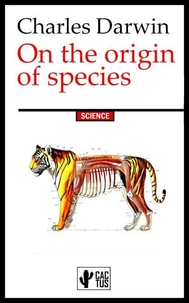
"On the Origin of Species" by Charles Darwin is a seminal work in the field of evolutionary biology, first published in 1859. This text introduces the scientific theory that populations evolve over generations through a process of natural selection. Darwin meticulously presents evidence gathered from his observations during the voyage of the HMS Beagle, as well as from his extensive research and experiments.
The book challenges the notion of fixed species, proposing instead that species adapt and change over time in response to environmental pressures. Darwin's arguments are structured around the idea that individuals with traits better suited to their environment are more likely to survive and reproduce, passing these advantageous traits to their offspring. This process, over long periods, leads to the emergence of new species.
The work is divided into several chapters, each addressing different aspects of the theory, such as variation under domestication, the struggle for existence, and the laws of variation. Darwin also anticipates and addresses potential objections to his theory, reinforcing his arguments with a wealth of empirical data. "On the Origin of Species" not only revolutionized the biological sciences but also had profound implications for other fields, influencing philosophical, social, and religious thought.
The book remains a cornerstone of modern biology, providing a framework for understanding the diversity of life on Earth.
The book challenges the notion of fixed species, proposing instead that species adapt and change over time in response to environmental pressures. Darwin's arguments are structured around the idea that individuals with traits better suited to their environment are more likely to survive and reproduce, passing these advantageous traits to their offspring. This process, over long periods, leads to the emergence of new species.
The work is divided into several chapters, each addressing different aspects of the theory, such as variation under domestication, the struggle for existence, and the laws of variation. Darwin also anticipates and addresses potential objections to his theory, reinforcing his arguments with a wealth of empirical data. "On the Origin of Species" not only revolutionized the biological sciences but also had profound implications for other fields, influencing philosophical, social, and religious thought.
The book remains a cornerstone of modern biology, providing a framework for understanding the diversity of life on Earth.