
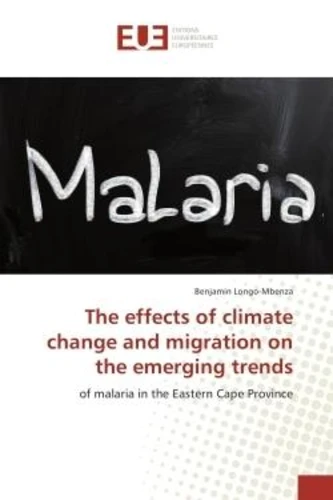
The effects of climate change and migration on the emerging trends. Of malaria in the eastern Cape Province
Par :Formats :
- Paiement en ligne :
- Livraison à domicile ou en point Mondial Relay estimée à partir du 17 septembreCet article sera commandé chez un fournisseur et vous sera envoyé 21 jours après la date de votre commande.
- Retrait Click and Collect en magasin gratuit
- Nombre de pages92
- PrésentationBroché
- Poids0.148 kg
- Dimensions15,2 cm × 22,9 cm × 0,6 cm
- ISBN978-3-330-87792-4
- EAN9783330877924
- Date de parution01/10/2018
- CollectionOMN.UNIV.EUROP.
- ÉditeurUniv Européenne
Résumé
Environmental and socio-demographic predictors of malaria transmission have instigated the disease incidence in new areas and highlands. South Africa, Eastern Cape Province, considered as malaria free-zone, have become a receptive area. Changes in the environmental (climate change, weather and vegetation) and socio demographic (human mobility) determinants may increase observed proportion of risk and vulnerability for malaria.
Increasing temperature and rainfall climate variability (extreme profile of both El Nino and La Nina), seasonality (from summer to early winter), vegetation change (bush encroachment) and human mobility were shown to predict malaria epidemics in the arid highlands of Eastern Cape. Hence, an urgent public health response including early warning and active surveillance system is required.
Increasing temperature and rainfall climate variability (extreme profile of both El Nino and La Nina), seasonality (from summer to early winter), vegetation change (bush encroachment) and human mobility were shown to predict malaria epidemics in the arid highlands of Eastern Cape. Hence, an urgent public health response including early warning and active surveillance system is required.
A propos de Benjamin Longo-Mbenza
35,90 €
69,90 €