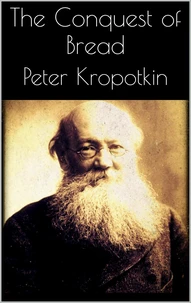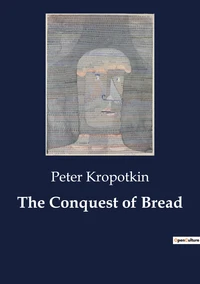
The Conquest of Bread. by Peter Kropotkin
Par :Formats :
- Paiement en ligne :
- Livraison à domicile ou en point Mondial Relay estimée à partir du 25 septembreCet article sera commandé chez un fournisseur et vous sera envoyé 21 jours après la date de votre commande.
- Retrait Click and Collect en magasin gratuit
- Nombre de pages268
- PrésentationBroché
- Poids0.351 kg
- Dimensions14,8 cm × 21,0 cm × 1,5 cm
- ISBN979-10-431-4377-9
- EAN9791043143779
- Date de parution27/03/2026
- ÉditeurCulturea
Résumé
The Conquest of Bread is a political treatise written by the anarcho-communist philosopher Peter Kropotkin. Written after a split between anarchists and Marxists at the First International (a 19th-century association of left-wing radicals), The Conquest of Bread advocates a path to a communist society distinct from Marx and Engels's Communist Manifesto, rooted in the principles of mutual aid and voluntary cooperation.
Since its original publication in 1892, The Conquest of Bread has immensely influenced both anarchist theory and anarchist praxis. As one of the first comprehensive works of anarcho-communist theory published for wide distribution, it both popularized anarchism in general and encouraged a shift in anarchist thought from individualist anarchism to social anarchism. It was also an influential text among the Spanish anarchists in the Spanish Civil War of the 1930s, and the late anarchist theorist and anthropologist David Graeber cited the book as an inspiration for the Occupy movement of the early 2010s in his 2011 book Debt : The First 5, 000 Years.
Since its original publication in 1892, The Conquest of Bread has immensely influenced both anarchist theory and anarchist praxis. As one of the first comprehensive works of anarcho-communist theory published for wide distribution, it both popularized anarchism in general and encouraged a shift in anarchist thought from individualist anarchism to social anarchism. It was also an influential text among the Spanish anarchists in the Spanish Civil War of the 1930s, and the late anarchist theorist and anthropologist David Graeber cited the book as an inspiration for the Occupy movement of the early 2010s in his 2011 book Debt : The First 5, 000 Years.