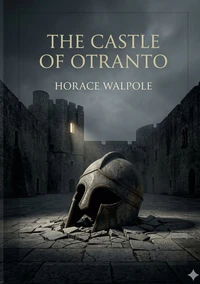
"The Castle of Otranto" by Horace Walpole is a pioneering work in the Gothic fiction genre, blending supernatural elements with human drama. The story unfolds in the castle of Otranto, where Prince Manfred is eager to secure his lineage through the marriage of his son, Conrad, to Isabella. However, tragedy strikes when Conrad is found dead, crushed by a mysterious giant helmet. This event sets off a chain of supernatural occurrences and revelations.
Manfred, desperate to maintain his family's hold on the castle, decides to divorce his wife, Hippolita, and marry Isabella himself, despite her resistance and the moral implications. Isabella, horrified by Manfred's intentions, attempts to escape through a secret passage in the castle, aided by a mysterious young peasant. As the narrative progresses, the castle becomes a site of eerie happenings, including moving portraits and ghostly apparitions, which suggest that the castle's true ownership is in question.
The story explores themes of power, legitimacy, and the supernatural, culminating in a dramatic revelation that fulfills an ancient prophecy. Walpole's novel is notable for its atmospheric setting and its role in establishing the conventions of Gothic literature, influencing countless works that followed.
"The Castle of Otranto" by Horace Walpole is a pioneering work in the Gothic fiction genre, blending supernatural elements with human drama. The story unfolds in the castle of Otranto, where Prince Manfred is eager to secure his lineage through the marriage of his son, Conrad, to Isabella. However, tragedy strikes when Conrad is found dead, crushed by a mysterious giant helmet. This event sets off a chain of supernatural occurrences and revelations.
Manfred, desperate to maintain his family's hold on the castle, decides to divorce his wife, Hippolita, and marry Isabella himself, despite her resistance and the moral implications. Isabella, horrified by Manfred's intentions, attempts to escape through a secret passage in the castle, aided by a mysterious young peasant. As the narrative progresses, the castle becomes a site of eerie happenings, including moving portraits and ghostly apparitions, which suggest that the castle's true ownership is in question.
The story explores themes of power, legitimacy, and the supernatural, culminating in a dramatic revelation that fulfills an ancient prophecy. Walpole's novel is notable for its atmospheric setting and its role in establishing the conventions of Gothic literature, influencing countless works that followed.