

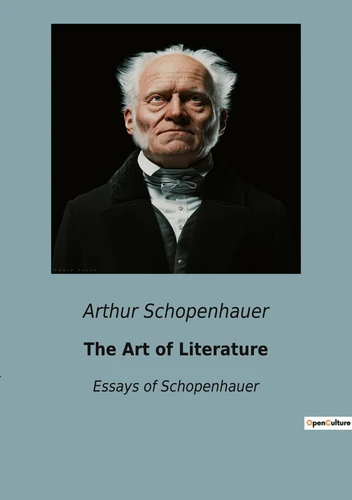
The Art of Literature
Par :Formats :
- Paiement en ligne :
- Livraison à domicile ou en point Mondial Relay estimée à partir du 16 septembreCet article sera commandé chez un fournisseur et vous sera envoyé 21 jours après la date de votre commande.
- Retrait Click and Collect en magasin gratuit
- Nombre de pages70
- FormatGrand Format
- PrésentationBroché
- Poids0.104 kg
- Dimensions14,8 cm × 21,0 cm × 0,4 cm
- ISBN978-2-38274-078-1
- EAN9782382740781
- Date de parution27/02/2022
- ÉditeurOpenCulture
Résumé
"The Art of Literature" by Arthur Schopenhauer, translated by T. Bailey Saunders, delves into the intricacies of writing, authorship, and literary style. Schopenhauer categorizes authors into those who write for the sake of the subject and those who write for the sake of writing itself, often driven by monetary gain. He criticizes the latter for their lack of genuine thought and originality, leading to a decline in literary quality.
Schopenhauer emphasizes the importance of having something meaningful to say, advocating for clarity, simplicity, and brevity in writing. He argues that true style is the reflection of a writer's intellect and character, and that it should be free from affectation and artificiality. The text also discusses the distinction between matter and form in literature, highlighting that while the subject matter can be accessible to all, the form is what distinguishes great writers.
Schopenhauer warns against the pitfalls of verbosity and the tendency to obscure meaning with complex language. He encourages writers to focus on the essence of their thoughts and to communicate them effectively, ensuring that their style is objective and comprehensible to the reader. The work serves as a guide for aspiring writers, urging them to prioritize substance over superficiality and to cultivate a genuine connection with their audience through thoughtful and clear expression.
Schopenhauer emphasizes the importance of having something meaningful to say, advocating for clarity, simplicity, and brevity in writing. He argues that true style is the reflection of a writer's intellect and character, and that it should be free from affectation and artificiality. The text also discusses the distinction between matter and form in literature, highlighting that while the subject matter can be accessible to all, the form is what distinguishes great writers.
Schopenhauer warns against the pitfalls of verbosity and the tendency to obscure meaning with complex language. He encourages writers to focus on the essence of their thoughts and to communicate them effectively, ensuring that their style is objective and comprehensible to the reader. The work serves as a guide for aspiring writers, urging them to prioritize substance over superficiality and to cultivate a genuine connection with their audience through thoughtful and clear expression.
A propos de Arthur Schopenhauer
2,49 €
Comment être heureux
Poche
3,00 €
Le Monde comme volonté et représentation
Beau Livre
77,00 €
6,10 €
Métaphysique de l'amour
E-book
6,99 €
15,10 €
9,00 €
2,99 €
5/5
Du néant de la vie
Poche
4,00 €
9,70 €