
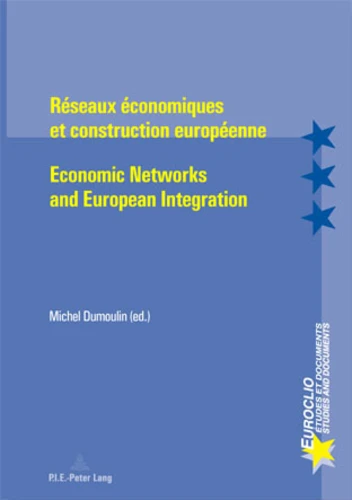
Réseaux économiques et construction européenne
Par :Formats :
- Paiement en ligne :
- Livraison à domicile ou en point Mondial Relay estimée à partir du 19 aoûtCet article sera commandé chez un fournisseur et vous sera envoyé 21 jours après la date de votre commande.
- Retrait Click and Collect en magasin gratuit
- Livraison à domicile ou en point Mondial Relay estimée à partir du 19 août
- Réservation en ligne avec paiement en magasin :
- Indisponible pour réserver et payer en magasin
- Nombre de pages499
- FormatGrand Format
- PrésentationBroché
- Poids0.671 kg
- Dimensions15,0 cm × 22,0 cm × 3,0 cm
- ISBN90-5201-234-2
- EAN9789052012346
- Date de parution01/01/2004
- CollectionEuroclio. Etudes et documents
- ÉditeurP.I.E. Peter Lang
Résumé
La notion de réseaux économiques n'a guère encore été mise en relation avec celle de gouvernance par les historiens. Ce volume s'y essaie à travers deux séries de questions. D'une part, quels sont les acteurs économiques qui, en dehors des instances publiques, combattent ou portent le projet européen et quels sont leurs objectifs ? D'autre part, comment, à travers des ensembles de relations complexes, notamment de maillages des espaces sociaux, ces acteurs influencent-ils une décision, une attitude ou une orientation concernant la gestion de la Cité européenne ? Vingt-huit contributions répondent à ces questions, sans omettre de prendre en compte les problèmes de méthode, le témoignage d'acteurs et les interpellations de décideurs contemporains.
The notion of economic network has rarely been linked by historians to that of governance. This volume attempts it by means of two series of questions. On the one hand, who are the economic actors that, beyond public authorities, fight or support the European project and what are their objectives ? On the other hand, how do these actors, by complex systems of relations, principally interconnections of the social sphere, influence a decision, an attitude or an orientation relating to the governance of Europe ? Twenty-eight contributions address these questions, and take into account issues of methodology, testimonies of actors and the interpellations of today's decision-makers.
The notion of economic network has rarely been linked by historians to that of governance. This volume attempts it by means of two series of questions. On the one hand, who are the economic actors that, beyond public authorities, fight or support the European project and what are their objectives ? On the other hand, how do these actors, by complex systems of relations, principally interconnections of the social sphere, influence a decision, an attitude or an orientation relating to the governance of Europe ? Twenty-eight contributions address these questions, and take into account issues of methodology, testimonies of actors and the interpellations of today's decision-makers.
A propos de Michel Dumoulin



17,99 €
3,99 €
8,49 €