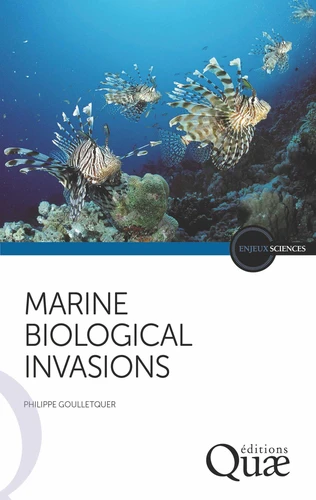
Biological invasions are one of the main causes of biodiversity decline worldwide. While Japanese knotweed and tiger mosquito are invasive species that are well known to the public, the same could not be said for the American blue crab and the green Algae Caulerpa in the Mediterranean seaside. Marine biological invasions receive little media coverage, even though their effects on biodiversity and human activities are just as worrying as terrestrial invasions.
Which marine species are considered invasive ? How are they introduced ? What impact do they have on local marine biodiversity ? And, above all, what management methods can be used to contain them, or even to take advantage of them ? Philippe Goulletquer reviews the latest advances in research into the detection, prevention, control and management of marine invasive species, in light of the new regulations in effect.
He highlights various international, European and national strategies and presents specific case studies of concerned species. This book is intended for people who are concerned about current environmental imbalances and interested in ways of combating them.
Biological invasions are one of the main causes of biodiversity decline worldwide. While Japanese knotweed and tiger mosquito are invasive species that are well known to the public, the same could not be said for the American blue crab and the green Algae Caulerpa in the Mediterranean seaside. Marine biological invasions receive little media coverage, even though their effects on biodiversity and human activities are just as worrying as terrestrial invasions.
Which marine species are considered invasive ? How are they introduced ? What impact do they have on local marine biodiversity ? And, above all, what management methods can be used to contain them, or even to take advantage of them ? Philippe Goulletquer reviews the latest advances in research into the detection, prevention, control and management of marine invasive species, in light of the new regulations in effect.
He highlights various international, European and national strategies and presents specific case studies of concerned species. This book is intended for people who are concerned about current environmental imbalances and interested in ways of combating them.