

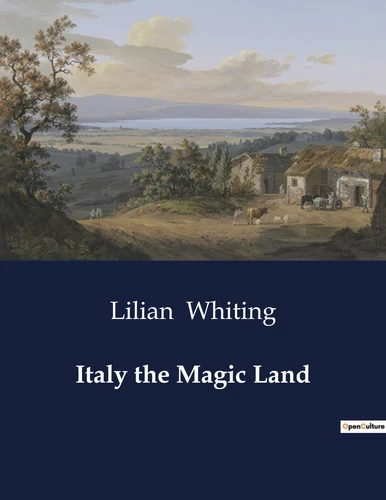
Lilian Whiting était une journaliste, rédactrice en chef et auteure de poésie et de nouvelles américaines. Elle a été rédactrice littéraire du Boston Evening Traveller, rédactrice en chef du Boston Budget, puis a passé une grande partie de son temps en Europe.
Italy the Magic Land. The Renaissance and Modern Art in Rome: A Journey Through Time
Par :Formats :
- Paiement en ligne :
- Livraison à domicile ou en point Mondial Relay estimée à partir du 16 septembreCet article sera commandé chez un fournisseur et vous sera envoyé 21 jours après la date de votre commande.
- Retrait Click and Collect en magasin gratuit
- Nombre de pages200
- PrésentationBroché
- Poids0.358 kg
- Dimensions17,0 cm × 22,0 cm × 1,4 cm
- ISBN979-10-419-8215-8
- EAN9791041982158
- Date de parution20/01/2024
- ÉditeurCulturea
Résumé
The text explores the rich tapestry of Rome's artistic and cultural history, focusing on the period of modern art in the Eternal City. It highlights the influence of renowned artists such as Canova, Thorwaldsen, and Gibson, who revitalized sculpture in the 19th century, drawing influence from the classical Greek and Renaissance periods. The narrative delves into the vibrant artistic community that flourished in Rome, attracting painters, sculptors, and writers from around the world.
This period saw the convergence of various nationalities, all united by their pursuit of beauty and artistic excellence. The text also reflects on the profound impact of Rome's historical and religious heritage on these artists, who found inspiration in the city's ancient ruins, majestic architecture, and the masterpieces housed in its museums and churches. The narrative further touches upon the literary figures who visited Rome, such as Longfellow, Hawthorne, and Browning, who were equally captivated by the city's allure.
The text underscores the enduring legacy of these artists and writers, whose works continue to shape the cultural and artistic landscape of Rome. Through their contributions, Rome remains a beacon of artistic evolution, where the past and present converge in a timeless celebration of creativity and human expression.
This period saw the convergence of various nationalities, all united by their pursuit of beauty and artistic excellence. The text also reflects on the profound impact of Rome's historical and religious heritage on these artists, who found inspiration in the city's ancient ruins, majestic architecture, and the masterpieces housed in its museums and churches. The narrative further touches upon the literary figures who visited Rome, such as Longfellow, Hawthorne, and Browning, who were equally captivated by the city's allure.
The text underscores the enduring legacy of these artists and writers, whose works continue to shape the cultural and artistic landscape of Rome. Through their contributions, Rome remains a beacon of artistic evolution, where the past and present converge in a timeless celebration of creativity and human expression.
A propos de Lilian Whiting

From Dreamland Sent (Unabridged)
Audiobook
5,49 €