

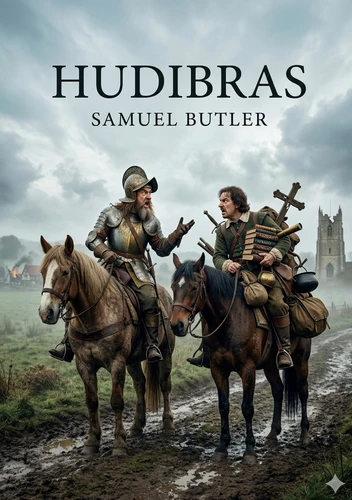
Hudibras. by Samuel Butler
Par :Formats :
- Paiement en ligne :
- Livraison à domicile ou en point Mondial Relay estimée à partir du 30 septembreCet article sera commandé chez un fournisseur et vous sera envoyé 21 jours après la date de votre commande.
- Retrait Click and Collect en magasin gratuit
- Nombre de pages446
- PrésentationBroché
- Poids0.573 kg
- Dimensions14,8 cm × 21,0 cm × 2,4 cm
- ISBN979-10-431-4154-6
- EAN9791043141546
- Date de parution14/03/2026
- ÉditeurCulturea
Résumé
The knight-errant Hudibras and his trusty (and somewhat more grounded) squire Ralph roam the land in search of adventure and love. Never the most congenial of partners, their constant arguments are Samuel Butler's satire of the major issues of the day in late 17th century Britain, including the recent civil war, religious sectarianism, philosophy, astrology, and even the differing rights of women and men.
Butler had originally studied to be a lawyer (which explains some of the detail in the third part of Hudibras), but made a living variously as a clerk, part-time painter, and secretary before dedicating himself to writing in 1662. Hudibras was immediately popular on the release of its first part, and, like Don Quixote, even had an unauthorized second part available before Butler had finished the genuine one.
Voltaire praised the humor, and although Samuel Pepys wasn't immediately taken with the poem, it was such the rage that he noted in his diary that he'd repurchased it to see again what the fuss was about. Hudibras's popularity did not fade for many years, and although some of the finer detail of 17th century talking points might be lost on the modern reader, the wit of the caricatures (and a large collection of endnotes) help bring this story to life.
Butler had originally studied to be a lawyer (which explains some of the detail in the third part of Hudibras), but made a living variously as a clerk, part-time painter, and secretary before dedicating himself to writing in 1662. Hudibras was immediately popular on the release of its first part, and, like Don Quixote, even had an unauthorized second part available before Butler had finished the genuine one.
Voltaire praised the humor, and although Samuel Pepys wasn't immediately taken with the poem, it was such the rage that he noted in his diary that he'd repurchased it to see again what the fuss was about. Hudibras's popularity did not fade for many years, and although some of the finer detail of 17th century talking points might be lost on the modern reader, the wit of the caricatures (and a large collection of endnotes) help bring this story to life.
A propos de Samuel Butler




3,87 €

1,36 €

Odyssey
E-book
0,99 €
4,99 €

Canterbury Pieces
E-book
1,99 €
1,99 €

Erewhon
E-book
1,99 €

The Way of All Flesh (UNABRIDGED)
Audiobook
4,22 €
Unconscious Memory
E-book
2,99 €
The Way of All Flesh
E-book
2,99 €
2,99 €
0,99 €