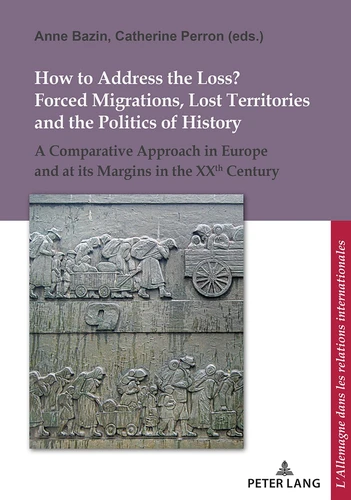
The map of Europe has been redrawn several times during the XXth century, in peaceful or violent ways, and the shifting of borders has often been associated with forced migrations. But despite the fact that this has been the fate of millions of Europeans, the memory of it has so far received little attention beyond national borders. This book examines how hosting states and societies, as well as groups that were forced to leave, deal with the memory of the loss in the long term.
It explores the politics of history and the conflicting interpretations of the loss associated with forced migrations. In a comparative and diachronic approach, the book depicts the interactions between the actors involved in the politics of history : their motivations, their resources and the public they seek to address. It looks at the different contexts in which these actors evolve and traces the changes of these politics in time and space.
It shows how the memory of territorial loss associated with forced migrations interferes with the present and how it has evolved within the political constrains of good neighborhood as well as of European and international standards that have emerged since the end of the cold war. By confronting case studies in Europe and at its margins, the book questions the emergence of more inclusive collective memories and memory cultures.
It is a significant contribution to a comparative approach on forced migrations and politics of history relating to loss.
The map of Europe has been redrawn several times during the XXth century, in peaceful or violent ways, and the shifting of borders has often been associated with forced migrations. But despite the fact that this has been the fate of millions of Europeans, the memory of it has so far received little attention beyond national borders. This book examines how hosting states and societies, as well as groups that were forced to leave, deal with the memory of the loss in the long term.
It explores the politics of history and the conflicting interpretations of the loss associated with forced migrations. In a comparative and diachronic approach, the book depicts the interactions between the actors involved in the politics of history : their motivations, their resources and the public they seek to address. It looks at the different contexts in which these actors evolve and traces the changes of these politics in time and space.
It shows how the memory of territorial loss associated with forced migrations interferes with the present and how it has evolved within the political constrains of good neighborhood as well as of European and international standards that have emerged since the end of the cold war. By confronting case studies in Europe and at its margins, the book questions the emergence of more inclusive collective memories and memory cultures.
It is a significant contribution to a comparative approach on forced migrations and politics of history relating to loss.