Finn Laursen has a PhD in Political Science from the University of Pennsylvania, USA, and holds a Canada Research Chair in EU Studies at Dalhousie University, Halifax, Nova Scotia, Canada. He directed the Dalhousie EU Centre of Excellence for six years (2006-12). Since 2007, he has also held an ad personam Jean Monnet Chair. His previous appointments include professorships at the European Institute of Public Administration, Maastricht, and the University of Southern Denmark, Odense.
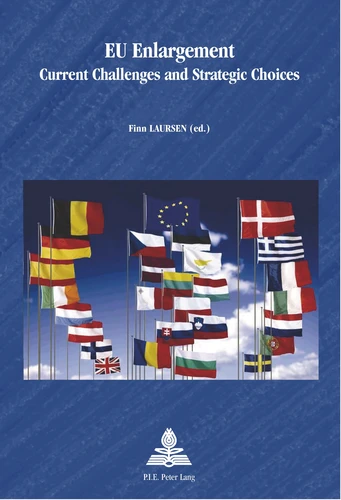
EU Enlargement. Current Challenges and Strategic Choices
Par :Formats :
- Nombre de pages360
- PrésentationBroché
- Poids0.488 kg
- Dimensions22,0 cm × 15,0 cm × 1,9 cm
- ISBN978-2-87574-067-0
- EAN9782875740670
- Date de parution14/09/2012
- CollectionPLG.HUMANITIES
- ÉditeurPeter Lang AG
Résumé
Successive enlargements of the EU have constituted major events in the history of European integration. They affect the Union's institutions, policies and policy-making processes and, because of the impact of these changes, enlargements have often been controversial. The major enlargement in 2004, which took the EU from 15 to 25 member countries, was followed by Romanian and Bulgarian membership in 2007 and Croatian membership in 2013.
It is often argued that there is now enlargement fatigue, and progress towards the next step seems slow. However, a number of countries, especially in the Western Balkans, are eager to join, and Turkey has been an official candidate since 1999. Major challenges lie ahead for the candidates as well as the EU. Will the candidates be able to carry out the required reforms to fulfil the membership conditions, and will the EU be able – politically and institutionally – to widen its membership further ? These decisions are of strategic importance for the future of Europe.
This book analyses the issues involved, exploring the status of the ongoing enlargement process and the political games associated with it.
It is often argued that there is now enlargement fatigue, and progress towards the next step seems slow. However, a number of countries, especially in the Western Balkans, are eager to join, and Turkey has been an official candidate since 1999. Major challenges lie ahead for the candidates as well as the EU. Will the candidates be able to carry out the required reforms to fulfil the membership conditions, and will the EU be able – politically and institutionally – to widen its membership further ? These decisions are of strategic importance for the future of Europe.
This book analyses the issues involved, exploring the status of the ongoing enlargement process and the political games associated with it.