Date/Lieu de naissance : 1845, Concordville, Pennsylvanie, États-Unis Date de décès : 1933, New York, État de New York, États-Unis
Individu et communauté (Spinoza - Warthon - Eschyl
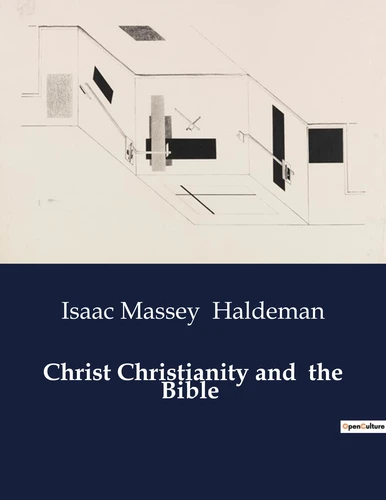
Christ Christianity and the Bible. The Divinity of Christ and the Essence of Christianity
Par : Formats :
- Paiement en ligne :
- Livraison à domicile ou en point Mondial Relay estimée à partir du 18 septembreCet article sera commandé chez un fournisseur et vous sera envoyé 21 jours après la date de votre commande.
- Retrait Click and Collect en magasin gratuit
- Nombre de pages94
- PrésentationBroché
- Poids0.161 kg
- Dimensions17,0 cm × 22,0 cm × 0,6 cm
- ISBN979-10-419-9509-7
- EAN9791041995097
- Date de parution31/03/2024
- ÉditeurCulturea
Résumé
In "Christ, Christianity and the Bible, " Isaac Massey Haldeman explores the fundamental question of Christ's divinity and its implications for Christianity. Haldeman argues that Jesus Christ's claim to be God is central to understanding his role and the essence of Christianity. He asserts that if Christ were not God, he could not be considered a good man, as claiming divinity without being divine would be deceitful.
Haldeman emphasizes that Christ's sinlessness, holiness, and transformative power over individuals and nature are evidence of his divine nature. The text also critiques modern interpretations of Christianity that reject the miraculous and doctrinal aspects, such as the virgin birth and resurrection, advocating instead for a social gospel focused on improving societal conditions. Haldeman contrasts this with the triumph of primitive Christianity, which embraced these doctrines and experienced significant growth and influence.
He concludes that the true essence of Christianity lies in recognizing Christ as both Savior and God, urging readers to acknowledge this divine relationship for personal and spiritual fulfillment.
Haldeman emphasizes that Christ's sinlessness, holiness, and transformative power over individuals and nature are evidence of his divine nature. The text also critiques modern interpretations of Christianity that reject the miraculous and doctrinal aspects, such as the virgin birth and resurrection, advocating instead for a social gospel focused on improving societal conditions. Haldeman contrasts this with the triumph of primitive Christianity, which embraced these doctrines and experienced significant growth and influence.
He concludes that the true essence of Christianity lies in recognizing Christ as both Savior and God, urging readers to acknowledge this divine relationship for personal and spiritual fulfillment.