Prix Nobel de Littérature
Individu et communauté (Spinoza - Warthon - Eschyl
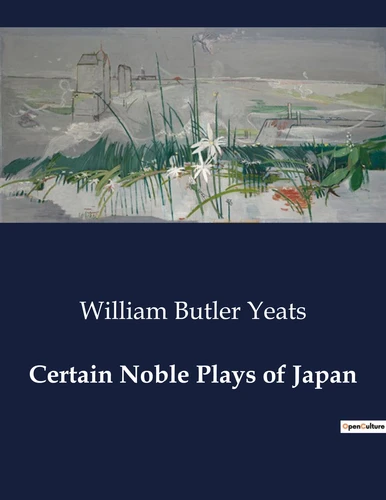
Certain Noble Plays of Japan. Exploring the Intersection of Japanese Noh Theatre and Western Literary Traditions
Par : Formats :
- Paiement en ligne :
- Livraison à domicile ou en point Mondial Relay estimée à partir du 7 septembreCet article sera commandé chez un fournisseur et vous sera envoyé 21 jours après la date de votre commande.
- Retrait Click and Collect en magasin gratuit
- Réservation en ligne avec paiement en magasin :
- Indisponible pour réserver et payer en magasin
- Nombre de pages32
- PrésentationBroché
- Poids0.069 kg
- Dimensions17,0 cm × 22,0 cm × 0,2 cm
- ISBN979-10-419-9513-4
- EAN9791041995134
- Date de parution31/03/2024
- ÉditeurCulturea
Résumé
"Certain Noble Plays of Japan" is a collection of Japanese Noh plays translated and adapted by Ezra Pound from the manuscripts of Ernest Fenollosa, with an introduction by William Butler Yeats. The work delves into the rich tradition of Noh theatre, a classical Japanese performing art that combines elements of dance, drama, music, and poetry. Yeats, in his introduction, reflects on the potential influence of Noh on Western drama, particularly in Ireland, where he envisions a form of theatre that is symbolic, indirect, and aristocratic, free from the constraints of commercialism and mass appeal.
He draws parallels between the stylized, ritualistic nature of Noh and the aspirations of the Irish dramatic movement, suggesting that the simplicity and symbolic depth of Noh could inspire a new form of poetic drama in the West. The plays themselves, such as "Nishikigi, " "Hagoromo, " and "Kumasaka, " explore themes of love, spirituality, and the supernatural, often involving interactions between humans and spirits or gods.
These narratives are deeply rooted in Japanese cultural and religious traditions, yet they resonate with universal themes of longing, redemption, and the search for meaning. The collection highlights the potential for cross-cultural exchange and the enrichment of Western literary traditions through the incorporation of Eastern aesthetics and philosophies.
He draws parallels between the stylized, ritualistic nature of Noh and the aspirations of the Irish dramatic movement, suggesting that the simplicity and symbolic depth of Noh could inspire a new form of poetic drama in the West. The plays themselves, such as "Nishikigi, " "Hagoromo, " and "Kumasaka, " explore themes of love, spirituality, and the supernatural, often involving interactions between humans and spirits or gods.
These narratives are deeply rooted in Japanese cultural and religious traditions, yet they resonate with universal themes of longing, redemption, and the search for meaning. The collection highlights the potential for cross-cultural exchange and the enrichment of Western literary traditions through the incorporation of Eastern aesthetics and philosophies.
A propos de William Butler Yeats
13,30 €
3.5/5
11,40 €
A Deep-Sworn Vow (Unabridged)
Audiobook
5,49 €
The Dolls (Unabridged)
Audiobook
5,49 €

5,49 €

4/5
Poems
E-book
8,99 €
The Wild Swans At Coole (Unabridged)
Audiobook
4,22 €
4,22 €
The Wanderings Of Oisin (Unabridged)
Audiobook
4,22 €
When you are old
E-book
5,72 €
5,72 €
Selected Poems
E-book
6,99 €
17,00 €
Ainsi parlait W.B. Yeats. Dits et maximes de vie
Grand Format
14,00 €