Biographies et mémoires 87
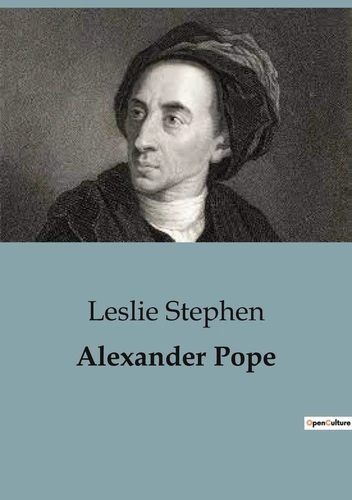
Alexander Pope. The Early Literary Journey of Alexander Pope
Par : Formats :
- Paiement en ligne :
- Livraison à domicile ou en point Mondial Relay estimée à partir du 5 octobreCet article sera commandé chez un fournisseur et vous sera envoyé 21 jours après la date de votre commande.
- Retrait Click and Collect en magasin gratuit
- Nombre de pages126
- PrésentationBroché
- Poids0.174 kg
- Dimensions14,8 cm × 21,0 cm × 0,7 cm
- ISBN979-10-418-1635-4
- EAN9791041816354
- Date de parution14/06/2023
- ÉditeurSHS Editions
Résumé
The text provides an in-depth exploration of the early literary career of Alexander Pope, a prominent English poet of the 18th century. Born in 1688 to a Catholic family, Pope faced numerous societal challenges due to his religion and frail health. Despite these obstacles, he demonstrated an early aptitude for poetry, influenced by the likes of Dryden and other classical writers. His early works, including "Pastorals" and the "Essay on Criticism, " showcase his developing style and adherence to the classical ideals of wit, nature, and correctness.
The "Pastorals, " published in Tonson's Miscellany, were exercises in versification, reflecting the influence of Virgil and Theocritus, though they lacked genuine rural sentiment. The "Essay on Criticism, " written when Pope was just 21, is a didactic poem that articulates the principles of good criticism and poetry, drawing heavily from classical sources and contemporary critics like Boileau and Dryden.
Pope's early success was marked by the recognition and support of established literary figures such as Sir William Trumbull and William Walsh, who encouraged his poetic endeavors. However, his rise to fame was not without conflict ; his relationship with Wycherley, an older poet, soured over disagreements about revisions to Wycherley's work. Despite these early controversies, Pope's talent and dedication to his craft positioned him as a leading figure in English literature, setting the stage for his later achievements, including his renowned translation of Homer.
The "Pastorals, " published in Tonson's Miscellany, were exercises in versification, reflecting the influence of Virgil and Theocritus, though they lacked genuine rural sentiment. The "Essay on Criticism, " written when Pope was just 21, is a didactic poem that articulates the principles of good criticism and poetry, drawing heavily from classical sources and contemporary critics like Boileau and Dryden.
Pope's early success was marked by the recognition and support of established literary figures such as Sir William Trumbull and William Walsh, who encouraged his poetic endeavors. However, his rise to fame was not without conflict ; his relationship with Wycherley, an older poet, soured over disagreements about revisions to Wycherley's work. Despite these early controversies, Pope's talent and dedication to his craft positioned him as a leading figure in English literature, setting the stage for his later achievements, including his renowned translation of Homer.