
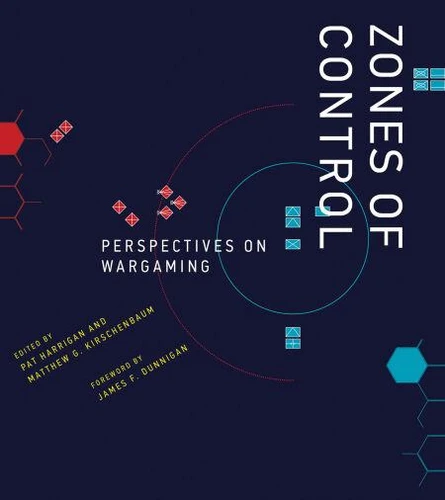
Zones of Control. Perspectives on Wargaming
Par : , ,Formats :
Disponible dans votre compte client Decitre ou Furet du Nord dès validation de votre commande. Le format ePub protégé est :
- Compatible avec une lecture sur My Vivlio (smartphone, tablette, ordinateur)
- Compatible avec une lecture sur liseuses Vivlio
- Pour les liseuses autres que Vivlio, vous devez utiliser le logiciel Adobe Digital Edition. Non compatible avec la lecture sur les liseuses Kindle, Remarkable et Sony
- Non compatible avec un achat hors France métropolitaine
 , qui est-ce ?
Notre partenaire de plateforme de lecture numérique où vous retrouverez l'ensemble de vos ebooks gratuitement
Pour en savoir plus sur nos ebooks, consultez notre aide en ligne ici
C'est si simple ! Lisez votre ebook avec l'app Vivlio sur votre tablette, mobile ou ordinateur :

- Nombre de pages848
- FormatePub
- ISBN978-0-262-33495-2
- EAN9780262334952
- Date de parution15/04/2016
- Protection num.Adobe DRM
- Taille22 Mo
- Infos supplémentairesepub
- ÉditeurThe MIT Press
Résumé
A look at wargaming's past, present, and future-from digital games to tabletop games-and its use in entertainment, education, and military planning. With examples from Call of Duty: Modern Warfare, Harpoon, Warhammer 40, 000, and more! Games with military themes date back to antiquity, and yet they are curiously neglected in much of the academic and trade literature on games and game history. This volume fills that gap, providing a diverse set of perspectives on wargaming's past, present, and future.
In Zones of Control, contributors consider wargames played for entertainment, education, and military planning, in terms of design, critical analysis, and historical contexts. They consider both digital and especially tabletop games, most of which cover specific historical conflicts or are grounded in recognizable real-world geopolitics. Game designers and players will find the historical and critical contexts often missing from design and hobby literature; military analysts will find connections to game design and the humanities; and academics will find documentation and critique of a sophisticated body of cultural work in which the complexity of military conflict is represented in ludic systems and procedures.
Each section begins with a long anchoring chapter by an established authority, which is followed by a variety of shorter pieces both analytic and anecdotal. Topics include the history of playing at war; operations research and systems design; wargaming and military history; wargaming's ethics and politics; gaming irregular and non-kinetic warfare; and wargames as artistic practice.
In Zones of Control, contributors consider wargames played for entertainment, education, and military planning, in terms of design, critical analysis, and historical contexts. They consider both digital and especially tabletop games, most of which cover specific historical conflicts or are grounded in recognizable real-world geopolitics. Game designers and players will find the historical and critical contexts often missing from design and hobby literature; military analysts will find connections to game design and the humanities; and academics will find documentation and critique of a sophisticated body of cultural work in which the complexity of military conflict is represented in ludic systems and procedures.
Each section begins with a long anchoring chapter by an established authority, which is followed by a variety of shorter pieces both analytic and anecdotal. Topics include the history of playing at war; operations research and systems design; wargaming and military history; wargaming's ethics and politics; gaming irregular and non-kinetic warfare; and wargames as artistic practice.