
Nouveauté
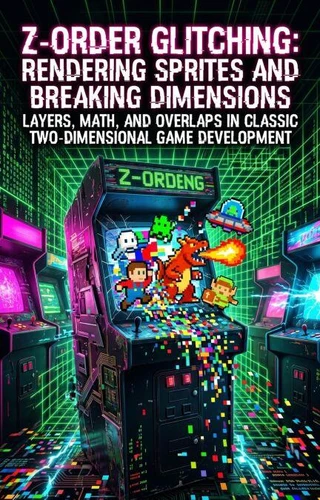
Z-Order Glitching: Rendering Sprites and Breaking Dimensions. Layers, Math, and Overlaps in Classic Two-Dimensional Game Development
Par :Formats :
Disponible dans votre compte client Decitre ou Furet du Nord dès validation de votre commande. Le format ePub est :
- Compatible avec une lecture sur My Vivlio (smartphone, tablette, ordinateur)
- Compatible avec une lecture sur liseuses Vivlio
- Pour les liseuses autres que Vivlio, vous devez utiliser le logiciel Adobe Digital Edition. Non compatible avec la lecture sur les liseuses Kindle, Remarkable et Sony
 , qui est-ce ?
Notre partenaire de plateforme de lecture numérique où vous retrouverez l'ensemble de vos ebooks gratuitement
Pour en savoir plus sur nos ebooks, consultez notre aide en ligne ici
C'est si simple ! Lisez votre ebook avec l'app Vivlio sur votre tablette, mobile ou ordinateur :

- Nombre de pages214
- FormatePub
- ISBN978-3-565-54695-4
- EAN9783565546954
- Date de parution08/07/2026
- Protection num.pas de protection
- Taille987 Ko
- Infos supplémentairesepub
- ÉditeurEmphaloz Publishing House
Résumé
In classic two-dimensional video games, depth is an elaborate and fragile mathematical lie. A television screen has no physical depth; it is merely a flat grid of illuminated pixels. To create the illusion that a hero is standing in front of a tree, programmers must dictate a strict rendering order.
This hierarchical system is known as the Z-order. The engine must calculate, frame by frame, which flat sprite gets drawn over another.
When developers push hardware to its absolute limits, these sorting algorithms inevitably break down. The result is the infamous Z-order glitch: characters walking through solid walls, weapons rendering behind the enemies they strike, and the visual fabric of the digital world tearing apart. This technical deep-dive explores the fascinating math behind retro sprite rendering. It details the brilliant shortcuts programmers invented to simulate three dimensions on 16-bit hardware, and the spectacular visual failures that occurred when those shortcuts failed. Step behind the flickering screen.
Understand the complex depth-sorting algorithms and chaotic visual glitches that defined the golden age of arcade and console programming.
When developers push hardware to its absolute limits, these sorting algorithms inevitably break down. The result is the infamous Z-order glitch: characters walking through solid walls, weapons rendering behind the enemies they strike, and the visual fabric of the digital world tearing apart. This technical deep-dive explores the fascinating math behind retro sprite rendering. It details the brilliant shortcuts programmers invented to simulate three dimensions on 16-bit hardware, and the spectacular visual failures that occurred when those shortcuts failed. Step behind the flickering screen.
Understand the complex depth-sorting algorithms and chaotic visual glitches that defined the golden age of arcade and console programming.