SOLDES
Jusqu'à -70% sur une sélection d'articles*

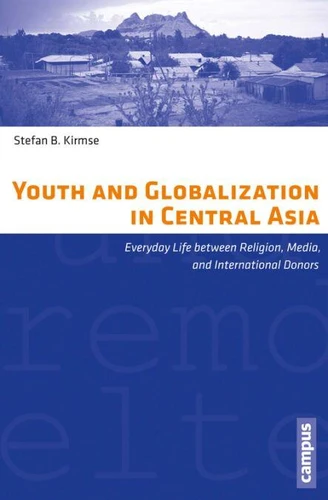
Youth and Globalization in Central Asia. Everyday Life between Religion, Media, and International Donors
Par :Formats :
Disponible dans votre compte client Decitre ou Furet du Nord dès validation de votre commande. Le format PDF est :
- Compatible avec une lecture sur My Vivlio (smartphone, tablette, ordinateur)
- Compatible avec une lecture sur liseuses Vivlio
- Pour les liseuses autres que Vivlio, vous devez utiliser le logiciel Adobe Digital Edition. Non compatible avec la lecture sur les liseuses Kindle, Remarkable et Sony
 , qui est-ce ?
Notre partenaire de plateforme de lecture numérique où vous retrouverez l'ensemble de vos ebooks gratuitement
Pour en savoir plus sur nos ebooks, consultez notre aide en ligne ici
C'est si simple ! Lisez votre ebook avec l'app Vivlio sur votre tablette, mobile ou ordinateur :

- Nombre de pages337
- FormatPDF
- ISBN978-3-593-41977-0
- EAN9783593419770
- Date de parution16/01/2013
- Protection num.Digital Watermarking
- Taille11 Mo
- Infos supplémentairespdf
- ÉditeurCampus
Résumé
Im zentralasiatischen Kirgistan, einst Teil der Sowjetunion, liegt die Stadt Osch. Sie gilt als Zentrum von Islamismus, politischer Instabilität und Entwicklungshilfe. Doch sie ist zugleich von der Globalisierung in all ihren Facetten geprägt. Stefan B. Kirmse zeigt, was dies für den Alltag junger Menschen bedeutet: Sie sind in besonderer Weise wirtschaftlichen Zwängen und sozialem Druck unterworfen.
Sie bewegen sich zwischen globalen Medien, religiösen Strömungen und westlichen Geldgebern und nutzen globale Verflechtungen auf vielfältige Art. Ein ethnografisches Porträt, das Erfahrungen von Postsozialismus und Globalisierung im muslimischen Raum miteinander verbindet. The Central Asian Republic of Kyrgyzstan, formerly part of the Soviet Union, is home to the city of Osh - a city renowned as an epicenter of Islamism and political instability.
Yet, it is also shaped by globalization in all its manifestations. Stefan Kirmse explores what this means for young people's everyday lives. He shows that youth move between global media, religious groups and Western donors, crafting their own unique experiences of globalization in an ongoing process of bricolage. At the same time, they are subject to particular economic constraints and communal expectations.
Sie bewegen sich zwischen globalen Medien, religiösen Strömungen und westlichen Geldgebern und nutzen globale Verflechtungen auf vielfältige Art. Ein ethnografisches Porträt, das Erfahrungen von Postsozialismus und Globalisierung im muslimischen Raum miteinander verbindet. The Central Asian Republic of Kyrgyzstan, formerly part of the Soviet Union, is home to the city of Osh - a city renowned as an epicenter of Islamism and political instability.
Yet, it is also shaped by globalization in all its manifestations. Stefan Kirmse explores what this means for young people's everyday lives. He shows that youth move between global media, religious groups and Western donors, crafting their own unique experiences of globalization in an ongoing process of bricolage. At the same time, they are subject to particular economic constraints and communal expectations.