SOLDES
Jusqu'à -70% sur une sélection d'articles*

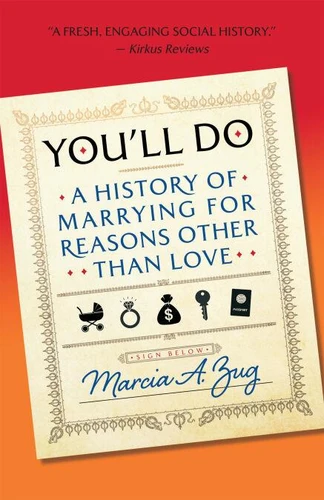
You'll Do. A History of Marrying for Reasons Other Than Love
Par :Formats :
Disponible dans votre compte client Decitre ou Furet du Nord dès validation de votre commande. Le format ePub protégé est :
- Compatible avec une lecture sur My Vivlio (smartphone, tablette, ordinateur)
- Compatible avec une lecture sur liseuses Vivlio
- Pour les liseuses autres que Vivlio, vous devez utiliser le logiciel Adobe Digital Edition. Non compatible avec la lecture sur les liseuses Kindle, Remarkable et Sony
- Non compatible avec un achat hors France métropolitaine
 , qui est-ce ?
Notre partenaire de plateforme de lecture numérique où vous retrouverez l'ensemble de vos ebooks gratuitement
Pour en savoir plus sur nos ebooks, consultez notre aide en ligne ici
C'est si simple ! Lisez votre ebook avec l'app Vivlio sur votre tablette, mobile ou ordinateur :

- Nombre de pages352
- FormatePub
- ISBN978-1-58642-375-9
- EAN9781586423759
- Date de parution09/01/2024
- Protection num.Adobe DRM
- Taille36 Mo
- Infos supplémentairesepub
- ÉditeurSteerforth
Résumé
An illuminating and thought-provoking examination of the uniquely American institution of marriage, from the Colonial era through the #MeToo agePerfect for fans of Rebecca Solnit and Rebecca TraisterAmericans hold marriage in such high esteem that we push people toward it, reward them for taking part in it, and fetishize its benefits to the point that we routinely ignore or excuse bad behavior and societal ills in the name of protecting and promoting it.
In eras of slavery and segregation, Blacks sometimes gained white legal status through marriage. Laws have been designed to encourage people to marry so that certain societal benefits could be achieved: the population would increase, women would have financial security, children would be cared for, and immigrants would have familial connections. As late as the Great Depression, poor young women were encouraged to marry aged Civil War veterans for lifetime pensions.
The widely overlooked problem with this tradition is that individuals and society have relied on marriage to address or dismiss a range of injustices and inequities, from gender- and race-based discrimination, sexual violence, and predation to unequal financial treatment. One of the most persuasive arguments against women's right to vote was that marrying and influencing their husband's choices was just as meaningful, if not better.
Through revealing storytelling, Zug builds a compelling case that when marriage is touted as "the solution" to such problems, it absolves the government, and society, of the responsibility for directly addressing them.
In eras of slavery and segregation, Blacks sometimes gained white legal status through marriage. Laws have been designed to encourage people to marry so that certain societal benefits could be achieved: the population would increase, women would have financial security, children would be cared for, and immigrants would have familial connections. As late as the Great Depression, poor young women were encouraged to marry aged Civil War veterans for lifetime pensions.
The widely overlooked problem with this tradition is that individuals and society have relied on marriage to address or dismiss a range of injustices and inequities, from gender- and race-based discrimination, sexual violence, and predation to unequal financial treatment. One of the most persuasive arguments against women's right to vote was that marrying and influencing their husband's choices was just as meaningful, if not better.
Through revealing storytelling, Zug builds a compelling case that when marriage is touted as "the solution" to such problems, it absolves the government, and society, of the responsibility for directly addressing them.