Yiddish Civilisation
Par :Formats :
Disponible dans votre compte client Decitre ou Furet du Nord dès validation de votre commande. Le format ePub protégé est :
- Compatible avec une lecture sur My Vivlio (smartphone, tablette, ordinateur)
- Compatible avec une lecture sur liseuses Vivlio
- Pour les liseuses autres que Vivlio, vous devez utiliser le logiciel Adobe Digital Edition. Non compatible avec la lecture sur les liseuses Kindle, Remarkable et Sony
- Non compatible avec un achat hors France métropolitaine
 , qui est-ce ?
Notre partenaire de plateforme de lecture numérique où vous retrouverez l'ensemble de vos ebooks gratuitement
Pour en savoir plus sur nos ebooks, consultez notre aide en ligne ici
C'est si simple ! Lisez votre ebook avec l'app Vivlio sur votre tablette, mobile ou ordinateur :

- Nombre de pages368
- FormatePub
- ISBN978-1-78022-141-0
- EAN9781780221410
- Date de parution24/08/2011
- Protection num.Adobe DRM
- Infos supplémentairesepub
- ÉditeurWeidenfeld & Nicolson
Résumé
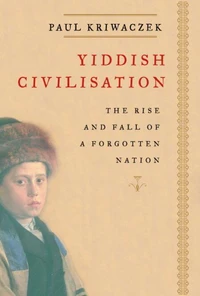
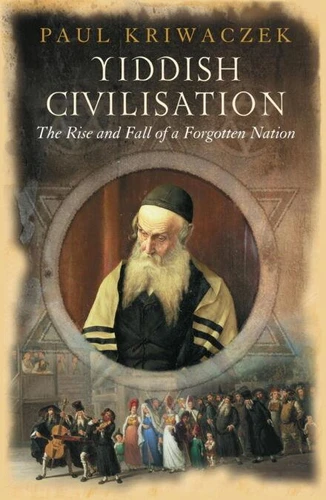
A portrait of a civilisation which flourished within living memory and left an indelible mark on historyIn the 13th century Yiddish language and culture began to spread from the Rhineland and Bavaria slowly east into Austria, Bohemia and Moravia, then to Poland and Lithuania and finally to western Russia and the Ukraine, becoming steadily less German and more Slav in the process. In its late-medieval heyday the culturally vibrant, economically successful, intellectually adventurous and largely self-ruling Yiddish society stretched from Riga on the Baltic down to Odessa on the Black Sea.
In the 1650s the Chmielnicki Massacres in the Ukraine by the Cossacks killed 100, 000 Jews, forcing those that were left to spread out into the small towns (shtetls) and villages. The break-up of Poland-Lithuania - a safe haven for Jews in previous centuries - in the late 18th century further disrupted Yiddish society, as did the Russian anti-Jewish pogroms from the 1880s onwards, at the very time when Yiddish was producing a rich stream of plays, poems and novels.
Paul Kriwaczek describes the development, over the centuries, of Yiddish language, religion, occupations and social life, art, music and literature. The book ends by describing how the Yiddish way of life became one of the foundation stones of modern American, and therefore of world, culture.
In the 1650s the Chmielnicki Massacres in the Ukraine by the Cossacks killed 100, 000 Jews, forcing those that were left to spread out into the small towns (shtetls) and villages. The break-up of Poland-Lithuania - a safe haven for Jews in previous centuries - in the late 18th century further disrupted Yiddish society, as did the Russian anti-Jewish pogroms from the 1880s onwards, at the very time when Yiddish was producing a rich stream of plays, poems and novels.
Paul Kriwaczek describes the development, over the centuries, of Yiddish language, religion, occupations and social life, art, music and literature. The book ends by describing how the Yiddish way of life became one of the foundation stones of modern American, and therefore of world, culture.