SOLDES
Jusqu'à -70% sur une sélection d'articles*

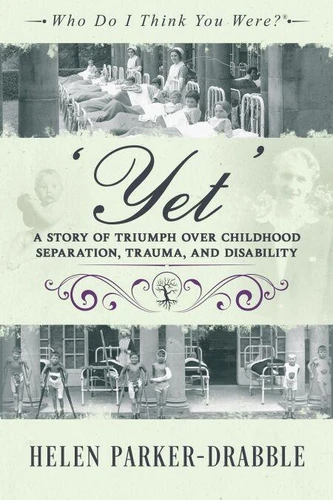
‘Yet’: A Story of Triumph over Childhood Separation, Trauma, and Disability. Who Do I Think You Were?®
Par :Formats :
Disponible dans votre compte client Decitre ou Furet du Nord dès validation de votre commande. Le format ePub est :
- Compatible avec une lecture sur My Vivlio (smartphone, tablette, ordinateur)
- Compatible avec une lecture sur liseuses Vivlio
- Pour les liseuses autres que Vivlio, vous devez utiliser le logiciel Adobe Digital Edition. Non compatible avec la lecture sur les liseuses Kindle, Remarkable et Sony
 , qui est-ce ?
Notre partenaire de plateforme de lecture numérique où vous retrouverez l'ensemble de vos ebooks gratuitement
Pour en savoir plus sur nos ebooks, consultez notre aide en ligne ici
C'est si simple ! Lisez votre ebook avec l'app Vivlio sur votre tablette, mobile ou ordinateur :

- FormatePub
- ISBN978-1-9162466-7-6
- EAN9781916246676
- Date de parution06/10/2025
- Protection num.pas de protection
- Infos supplémentairesepub
- ÉditeurHelen Parker-Drabble
Résumé
"No one believed me. 'Children couldn't have been treated like that.' But we were."-Harry DrabbleIn 1937, two-year-old Harry Drabble was diagnosed with bovine tuberculosis after drinking unpasteurised milk. Torn from his mother's arms, he spent much of his childhood confined to Sheffield's King Edward VII Memorial Hospital for Crippled Children, enduring emotional neglect and years of isolation while immobilised in bed.
Told through Harry's unflinching words and his daughter Helen Parker-Drabble's meticulous research, this poignant memoir reveals the shocking inadequacies of early 20th-century healthcare while celebrating one boy's extraordinary resilience. Harry's life was defined by a simple yet transformative mantra: 'I can't. yet.' Told he would never work, find love, or support a family, Harry refused to give in to those predictions.
He taught himself to read and mastered the violin while living with physical challenges, earned professional qualifications despite limited schooling, and went on to create the loving family he was told was out of reach. This father-daughter collaboration offers a rare glimpse into a forgotten chapter of British medical history, ensuring the forgotten children institutionalised during the early to mid-20th century are seen, heard and remembered.
Yet is both a tribute to Harry's indomitable spirit and a timeless reminder of the power of hope, perseverance, and the word 'yet.'
Told through Harry's unflinching words and his daughter Helen Parker-Drabble's meticulous research, this poignant memoir reveals the shocking inadequacies of early 20th-century healthcare while celebrating one boy's extraordinary resilience. Harry's life was defined by a simple yet transformative mantra: 'I can't. yet.' Told he would never work, find love, or support a family, Harry refused to give in to those predictions.
He taught himself to read and mastered the violin while living with physical challenges, earned professional qualifications despite limited schooling, and went on to create the loving family he was told was out of reach. This father-daughter collaboration offers a rare glimpse into a forgotten chapter of British medical history, ensuring the forgotten children institutionalised during the early to mid-20th century are seen, heard and remembered.
Yet is both a tribute to Harry's indomitable spirit and a timeless reminder of the power of hope, perseverance, and the word 'yet.'