SOLDES
Jusqu'à -70% sur une sélection d'articles*

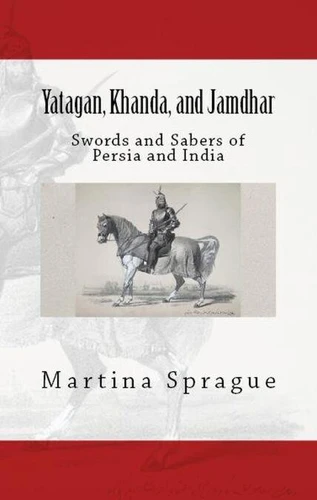
Yatagan, Khanda, and Jamdhar: Swords and Sabers of Persia and India. Knives, Swords, and Bayonets: A World History of Edged Weapon Warfare, #6
Par :Formats :
Disponible dans votre compte client Decitre ou Furet du Nord dès validation de votre commande. Le format ePub protégé est :
- Compatible avec une lecture sur My Vivlio (smartphone, tablette, ordinateur)
- Compatible avec une lecture sur liseuses Vivlio
- Pour les liseuses autres que Vivlio, vous devez utiliser le logiciel Adobe Digital Edition. Non compatible avec la lecture sur les liseuses Kindle, Remarkable et Sony
- Non compatible avec un achat hors France métropolitaine
 , qui est-ce ?
Notre partenaire de plateforme de lecture numérique où vous retrouverez l'ensemble de vos ebooks gratuitement
Pour en savoir plus sur nos ebooks, consultez notre aide en ligne ici
C'est si simple ! Lisez votre ebook avec l'app Vivlio sur votre tablette, mobile ou ordinateur :

- FormatePub
- ISBN978-1-5401-7906-7
- EAN9781540179067
- Date de parution17/03/2018
- Protection num.Adobe DRM
- Infos supplémentairesepub
- ÉditeurOxford University Press
Résumé
The important role that edged weaponry played in early Persia is evidenced by the region's long history of metallurgic science, the sword's mention in poetry, and its use as a sidearm to cavalry employing lance, mace, and bow. Edged weaponry proved no less important to the Ottoman Turks, who depicted the two-edged sword of Othman on the standard carried by the disciplined recruits, the corps of Janissaries, who served the sultan and defended the conquered Christian territories.
India, which bordered the Persian Empire, has a turbulent history as well, that speaks of long periods of foreign influence and threats from Islamic invaders. Although India adopted Persian-style weaponry, the many indigenous sword shapes and the ingenuity displayed in design testify to the important role the sword played as a weapon of war and an article of dress and status. The sword was no doubt a pragmatic battlefield weapon, as evidenced by its use in the extensive wars of the Mughals, Rajputs, and Sikhs.
This book starts with an overview of metallurgic science and the development of edged weapons in pre-historic Persia and India. Its main focus is the Common Era, however. Islamic culture and conflict in the pre-medieval period and through the Crusades is discussed first, including warfare against the Byzantine Empire. An examination of the use of the sword in the wars of the Ottoman Empire from the fifteenth century CE follows.
Next the book explores warfare and the development of edged weapons in India from medieval times into near modern day. It touches on the Sikh Wars and India's conflicts with the British Empire. The concluding remarks emphasize the sword as a lethal and reliable weapon into near modern day, and makes particular note of the philosophical value of the sword.
India, which bordered the Persian Empire, has a turbulent history as well, that speaks of long periods of foreign influence and threats from Islamic invaders. Although India adopted Persian-style weaponry, the many indigenous sword shapes and the ingenuity displayed in design testify to the important role the sword played as a weapon of war and an article of dress and status. The sword was no doubt a pragmatic battlefield weapon, as evidenced by its use in the extensive wars of the Mughals, Rajputs, and Sikhs.
This book starts with an overview of metallurgic science and the development of edged weapons in pre-historic Persia and India. Its main focus is the Common Era, however. Islamic culture and conflict in the pre-medieval period and through the Crusades is discussed first, including warfare against the Byzantine Empire. An examination of the use of the sword in the wars of the Ottoman Empire from the fifteenth century CE follows.
Next the book explores warfare and the development of edged weapons in India from medieval times into near modern day. It touches on the Sikh Wars and India's conflicts with the British Empire. The concluding remarks emphasize the sword as a lethal and reliable weapon into near modern day, and makes particular note of the philosophical value of the sword.