SOLDES
Jusqu'à -70% sur une sélection d'articles*

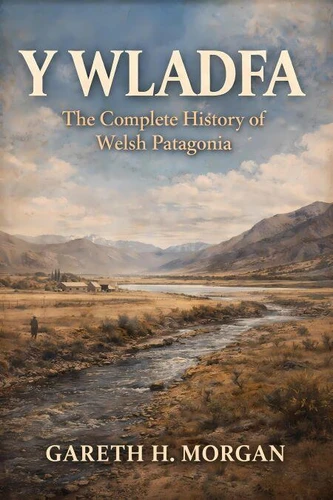
Y Wladfa: The Complete History of Welsh Patagonia
Par :Formats :
Disponible dans votre compte client Decitre ou Furet du Nord dès validation de votre commande. Le format ePub est :
- Compatible avec une lecture sur My Vivlio (smartphone, tablette, ordinateur)
- Compatible avec une lecture sur liseuses Vivlio
- Pour les liseuses autres que Vivlio, vous devez utiliser le logiciel Adobe Digital Edition. Non compatible avec la lecture sur les liseuses Kindle, Remarkable et Sony
 , qui est-ce ?
Notre partenaire de plateforme de lecture numérique où vous retrouverez l'ensemble de vos ebooks gratuitement
Pour en savoir plus sur nos ebooks, consultez notre aide en ligne ici
C'est si simple ! Lisez votre ebook avec l'app Vivlio sur votre tablette, mobile ou ordinateur :

- FormatePub
- ISBN8223252405
- EAN9798223252405
- Date de parution06/02/2026
- Protection num.pas de protection
- Infos supplémentairesepub
- ÉditeurDraft2Digital
Résumé
In July 1865, 153 Welsh emigrants landed on the coast of Patagonia with the explicit aim of establishing a Welsh-speaking community beyond the reach of English linguistic and cultural dominance. What followed was neither the utopian success imagined by organisers nor the outright failure that the colony's early crises appeared to foreshadow. This book presents a comprehensive, evidence-based history of Welsh Patagonia from the first landing in 1865 through to the present day.
It examines how the settlement survived extreme environmental conditions, including aridity and flooding; how irrigation agriculture transformed the Lower Chubut Valley; and how institutions such as chapels, schools, and local governance sustained Welsh language and cultural life across generations. It also addresses the colony's complex and often uncomfortable relationships with Indigenous Tehuelche peoples and with the expanding Argentine state.
Rejecting romanticised heritage narratives, this history confronts difficult realities directly. It acknowledges settler colonialism, indigenous dispossession, and the persistent gap between founding ideals and achievable outcomes. It traces the shift of Welsh from a community language to a heritage language, documents the gradual loss of political autonomy under Argentine nation-building, and explains why geographic isolation proved neither sustainable nor sufficient as a defence against linguistic assimilation.
The book covers the full chronological arc of the settlement, including expansion into the Andean regions, transformation during the twentieth century, and contemporary efforts to preserve Welsh language and cultural presence. It draws on scholarly research, archival sources, and institutional records while remaining accessible to general readers. Written for readers seeking serious history rather than commemoration, this work will appeal to students, researchers, Welsh diaspora communities, and those interested in minority language survival, migration history, and the limits of cultural preservation through settlement.
What emerges is neither celebration nor condemnation, but a clear-eyed assessment of what the Welsh Patagonian experiment achieved, what it failed to achieve, and what it reveals about culture, power, and endurance in a changing world.
It examines how the settlement survived extreme environmental conditions, including aridity and flooding; how irrigation agriculture transformed the Lower Chubut Valley; and how institutions such as chapels, schools, and local governance sustained Welsh language and cultural life across generations. It also addresses the colony's complex and often uncomfortable relationships with Indigenous Tehuelche peoples and with the expanding Argentine state.
Rejecting romanticised heritage narratives, this history confronts difficult realities directly. It acknowledges settler colonialism, indigenous dispossession, and the persistent gap between founding ideals and achievable outcomes. It traces the shift of Welsh from a community language to a heritage language, documents the gradual loss of political autonomy under Argentine nation-building, and explains why geographic isolation proved neither sustainable nor sufficient as a defence against linguistic assimilation.
The book covers the full chronological arc of the settlement, including expansion into the Andean regions, transformation during the twentieth century, and contemporary efforts to preserve Welsh language and cultural presence. It draws on scholarly research, archival sources, and institutional records while remaining accessible to general readers. Written for readers seeking serious history rather than commemoration, this work will appeal to students, researchers, Welsh diaspora communities, and those interested in minority language survival, migration history, and the limits of cultural preservation through settlement.
What emerges is neither celebration nor condemnation, but a clear-eyed assessment of what the Welsh Patagonian experiment achieved, what it failed to achieve, and what it reveals about culture, power, and endurance in a changing world.