
Jenny Kerber teaches in the areas of Canadian and American literature, literary theory, and environmental criticism in the Department of English at the University of Toronto. Her essays on Canadian literary and environmental topics have appeared in Canadian Poetry, Canadian Literature, Essays on Canadian Writing, and Green Letters. This is her first book.
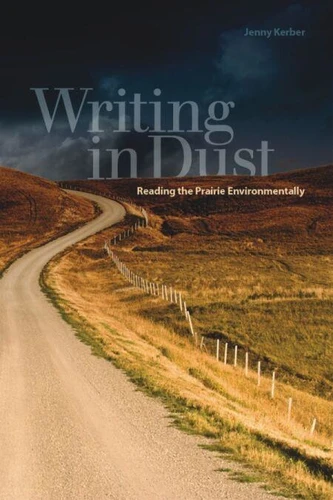
Writing in Dust. Reading the Prairie Environmentally
Par :Formats :
Disponible dans votre compte client Decitre ou Furet du Nord dès validation de votre commande. Le format ePub est :
- Compatible avec une lecture sur My Vivlio (smartphone, tablette, ordinateur)
- Compatible avec une lecture sur liseuses Vivlio
- Pour les liseuses autres que Vivlio, vous devez utiliser le logiciel Adobe Digital Edition. Non compatible avec la lecture sur les liseuses Kindle, Remarkable et Sony
 , qui est-ce ?
Notre partenaire de plateforme de lecture numérique où vous retrouverez l'ensemble de vos ebooks gratuitement
Pour en savoir plus sur nos ebooks, consultez notre aide en ligne ici
C'est si simple ! Lisez votre ebook avec l'app Vivlio sur votre tablette, mobile ou ordinateur :

- Nombre de pages295
- FormatePub
- ISBN978-1-55458-721-6
- EAN9781554587216
- Date de parution17/03/2011
- Protection num.Digital Watermarking
- Taille4 Mo
- Infos supplémentairesepub
- ÉditeurWilfrid Laurier University Press
Résumé
Writing in Dust is the first sustained study of prairie Canadian literature from an ecocritical perspective. Drawing on recent scholarship in environmental theory and criticism, Jenny Kerber considers the ways in which prairie writers have negotiated processes of ecological and cultural change in the region from the early twentieth century to the present. The book begins by proposing that current environmental problems in the prairie region can be understood by examining the longstanding tendency to describe its diverse terrain in dualistic terms-either as an idyllic natural space or as an irredeemable wasteland.
It inquires into the sources of stories that naturalize ecological prosperity and hardship and investigates how such narratives have been deployed from the period of colonial settlement to the present. It then considers the ways in which works by both canonical and more recent writers ranging from Robert Stead, W. O. Mitchell, and Margaret Laurence to Tim Lilburn, Louise Halfe, and Thomas King consistently challenge these dualistic landscape myths, proposing alternatives for the development of more ecologically just and sustainable relationships among people and between humans and their physical environments.
Writing in Dust asserts that "reading environmentally" can help us to better understand a host of issues facing prairie inhabitants today, including the environmental impacts of industrial agriculture, resource extraction, climate change, shifting urban-rural demographics, the significance of Indigenous understandings of human-nature relationships, and the complex, often contradictory meanings of eco-cultural metaphors of alien/invasiveness, hybridity, and wildness.
It inquires into the sources of stories that naturalize ecological prosperity and hardship and investigates how such narratives have been deployed from the period of colonial settlement to the present. It then considers the ways in which works by both canonical and more recent writers ranging from Robert Stead, W. O. Mitchell, and Margaret Laurence to Tim Lilburn, Louise Halfe, and Thomas King consistently challenge these dualistic landscape myths, proposing alternatives for the development of more ecologically just and sustainable relationships among people and between humans and their physical environments.
Writing in Dust asserts that "reading environmentally" can help us to better understand a host of issues facing prairie inhabitants today, including the environmental impacts of industrial agriculture, resource extraction, climate change, shifting urban-rural demographics, the significance of Indigenous understandings of human-nature relationships, and the complex, often contradictory meanings of eco-cultural metaphors of alien/invasiveness, hybridity, and wildness.