
Jamesgreene89 'on purpose generic' bugbee fuss
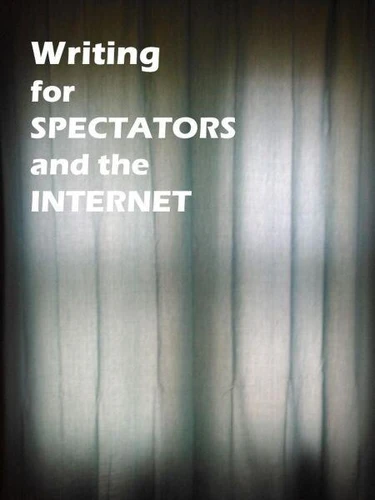
Writing for Spectators and the Internet
Par :Formats :
Disponible dans votre compte client Decitre ou Furet du Nord dès validation de votre commande. Le format ePub est :
- Compatible avec une lecture sur My Vivlio (smartphone, tablette, ordinateur)
- Compatible avec une lecture sur liseuses Vivlio
- Pour les liseuses autres que Vivlio, vous devez utiliser le logiciel Adobe Digital Edition. Non compatible avec la lecture sur les liseuses Kindle, Remarkable et Sony
 , qui est-ce ?
Notre partenaire de plateforme de lecture numérique où vous retrouverez l'ensemble de vos ebooks gratuitement
Pour en savoir plus sur nos ebooks, consultez notre aide en ligne ici
C'est si simple ! Lisez votre ebook avec l'app Vivlio sur votre tablette, mobile ou ordinateur :

- FormatePub
- ISBN978-1-393-40168-1
- EAN9781393401681
- Date de parution04/08/2020
- Protection num.pas de protection
- Infos supplémentairesepub
- ÉditeurRelay Publishing
Résumé
This book of essays presents actors within our historical and contemporary context, at the standpoint of the turn of a twenty-first century. We shall artistically and interpretively think of these societal actors, persons, ideas, authoritative activities, and otherwise as spectators. Being spectators ourselves, we shall add our own contemplation, imagination, and speculation. If we set back upon each other in this way, it is possible to pose some awkwardly fascinating philosophical positions, or at least posit a possibility of interaction between societal actors, spectators, and the thoughts that arise among these events. This isn't an attempt to defame or dethrone any specific celebrity, politician, or leader, but to look at events and note where a philosophical threshold rises.
The spectator-whoever and whatever he is-knowingly or not, enlightens us about something. Examples in our popular culture provide spectatorships-a continual and reoccurring play we call history, having its own characters and actors. There must be a positive spin to this autonomous development. Once we step back and view the broad, picturesque, panorama, it's all essentially human creations, constructions, and artificial machinations of norms, conceptions, rules, tools, and the like, right?
The spectator-whoever and whatever he is-knowingly or not, enlightens us about something. Examples in our popular culture provide spectatorships-a continual and reoccurring play we call history, having its own characters and actors. There must be a positive spin to this autonomous development. Once we step back and view the broad, picturesque, panorama, it's all essentially human creations, constructions, and artificial machinations of norms, conceptions, rules, tools, and the like, right?
A propos de James Greene
1,99 €
1,99 €
1,99 €
1,99 €
1,99 €