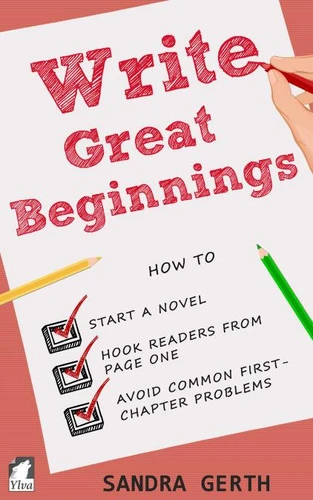
Write Great Beginnings
Par :Formats :
Disponible dans votre compte client Decitre ou Furet du Nord dès validation de votre commande. Le format ePub est :
- Compatible avec une lecture sur My Vivlio (smartphone, tablette, ordinateur)
- Compatible avec une lecture sur liseuses Vivlio
- Pour les liseuses autres que Vivlio, vous devez utiliser le logiciel Adobe Digital Edition. Non compatible avec la lecture sur les liseuses Kindle, Remarkable et Sony
 , qui est-ce ?
Notre partenaire de plateforme de lecture numérique où vous retrouverez l'ensemble de vos ebooks gratuitement
Pour en savoir plus sur nos ebooks, consultez notre aide en ligne ici
C'est si simple ! Lisez votre ebook avec l'app Vivlio sur votre tablette, mobile ou ordinateur :

- Nombre de pages165
- FormatePub
- ISBN978-3-96324-341-7
- EAN9783963243417
- Date de parution04/03/2020
- Protection num.pas de protection
- Taille705 Ko
- Infos supplémentairesepub
- ÉditeurYlva Publishing
Résumé
The beginning is the most important part of your book. The first chapter-probably even the first page-is what makes agents and editors accept or reject a manuscript, and it's what makes readers decide to buy a book or pick another. But writing a compelling opening is hard because there are so many things a great beginning needs to do and so many mistakes to avoid.
In this book, Sandra Gerth draws on her experience as an editor and best-selling author to teach you where to start your novel, how to avoid common first chapter problems, and how to hook your readers from the very first page.
Each chapter of this practical guide includes concrete examples and exercises that will help you write an irresistible beginning.
Whether you're a novice writer working on your first story or an established author with several novels under your belt, this book will help you:
?Decide where to start your book,
?Understand important elements of every powerful opening such as the inciting incident,
?Write a kickass first line,
?Hook your readers from the very first page,
?Introduce your characters and get readers to care about them,
?Establish the time and place of your story,
?Get your readers emotionally involved in your story as soon as possible,
?Describe your setting and your characters without stopping the momentum of the story,
?Incorporate backstory and reveal your characters' pasts without overwhelming readers,
?Create chapter endings that will make readers keep reading.
?Avoid openings that are boring, confusing, clichéd, or misleading,
?Discover what types of openings to avoid,
?Find out why prologues and flashbacks can be problematic and how to handle them effectively.