SOLDES
Jusqu'à -70% sur une sélection d'articles*

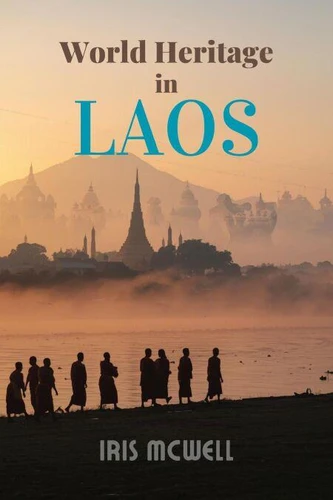
World Heritage in Laos. World Heritage Southeast Asia, #5
Par :Formats :
Disponible dans votre compte client Decitre ou Furet du Nord dès validation de votre commande. Le format ePub est :
- Compatible avec une lecture sur My Vivlio (smartphone, tablette, ordinateur)
- Compatible avec une lecture sur liseuses Vivlio
- Pour les liseuses autres que Vivlio, vous devez utiliser le logiciel Adobe Digital Edition. Non compatible avec la lecture sur les liseuses Kindle, Remarkable et Sony
 , qui est-ce ?
Notre partenaire de plateforme de lecture numérique où vous retrouverez l'ensemble de vos ebooks gratuitement
Pour en savoir plus sur nos ebooks, consultez notre aide en ligne ici
C'est si simple ! Lisez votre ebook avec l'app Vivlio sur votre tablette, mobile ou ordinateur :

- FormatePub
- ISBN8231007189
- EAN9798231007189
- Date de parution01/02/2026
- Protection num.pas de protection
- Infos supplémentairesepub
- ÉditeurWalzone Press
Résumé
Nestled in the heart of mainland Southeast Asia, the Lao People's Democratic Republic guards a heritage of profound depth and quiet dignity-a legacy where ancient traditions persist as living presence rather than museum artifacts. This volume examines Laos' World Heritage properties, which represent physical manifestations of how civilizations have sought meaning through ritual, stone, and landscape across millennia.
The book provides in-depth coverage of four major sites: Town of Luang Prabang: An exquisitely preserved fusion of traditional Lao urban structures and 19th-20th century European colonial architecture. It is a "living historic town" where the daily rhythms of Buddhist practice, such as the pre-dawn Tak Bat (alms-giving) ceremony, animate its ancient streets. Vat Phou and Associated Ancient Settlements: A ruined Khmer-Hindu temple complex dating back to at least the 5th century.
It exemplifies sacred landscape architecture, harmonizing mountain, river, and temple into a microcosm of the Hindu cosmos. Megalithic Jar Sites in Xiengkhuang (Plain of Jars): An enigmatic Iron Age landscape featuring over 2, 100 massive stone vessels used for prehistoric funerary practices. The book details their archaeological mystery and the heroic demining efforts that reclaimed the land from the "Secret War".
Hin Nam No National Park: Laos' first natural World Heritage site (inscribed in 2025), which forms a transboundary karst ecosystem with Vietnam's Phong Nha-Ke Bang. It is home to spectacular biodiversity and the planet's largest river cave passage at Xe Bang Fai. What unites these sites is their resilience-their capacity to absorb historical trauma, such as colonialism and intense aerial bombardment, while maintaining spiritual and ecological continuity.
The book provides in-depth coverage of four major sites: Town of Luang Prabang: An exquisitely preserved fusion of traditional Lao urban structures and 19th-20th century European colonial architecture. It is a "living historic town" where the daily rhythms of Buddhist practice, such as the pre-dawn Tak Bat (alms-giving) ceremony, animate its ancient streets. Vat Phou and Associated Ancient Settlements: A ruined Khmer-Hindu temple complex dating back to at least the 5th century.
It exemplifies sacred landscape architecture, harmonizing mountain, river, and temple into a microcosm of the Hindu cosmos. Megalithic Jar Sites in Xiengkhuang (Plain of Jars): An enigmatic Iron Age landscape featuring over 2, 100 massive stone vessels used for prehistoric funerary practices. The book details their archaeological mystery and the heroic demining efforts that reclaimed the land from the "Secret War".
Hin Nam No National Park: Laos' first natural World Heritage site (inscribed in 2025), which forms a transboundary karst ecosystem with Vietnam's Phong Nha-Ke Bang. It is home to spectacular biodiversity and the planet's largest river cave passage at Xe Bang Fai. What unites these sites is their resilience-their capacity to absorb historical trauma, such as colonialism and intense aerial bombardment, while maintaining spiritual and ecological continuity.
A propos de Iris Mcwell

5,99 €
5,99 €
5,99 €
5,99 €
5,99 €
5,99 €
5,99 €
5,99 €